Summary

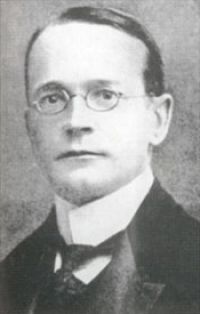
Portrait of Joseph McCabe Joseph McCabe The Story of Evolution

But the characteristic life, in water and on land, was the vast and diversified family of the reptiles. In the western and the eastern continent, and along the narrowing bridge that still united them, in the northern hemisphere and the southern, and along every ridge of land that connected them, these sluggish but formidable monsters filled the stage. Every conceivable device in the way of arms and armour, brute strength and means of escape, seemed to be adopted in their development, as if they were the final and indestructible outcome of the life-principle.
Source: Gutenberg

Portrait of Joseph McCabe Joseph McCabe The Story of Evolution

The earth now buries its dead, and from their petrified remains we conjure up a picture of the swarming life of the Cambrian ocean.
A strange, sluggish population burrows in the mud, crawls over the sand, adheres to the rocks, and swims among the thickets of sea-weed. The strangest and most formidable, though still too puny a thing to survive in a more strenuous age, is the familiar Trilobite of the geological museum; a flattish animal with broad, round head, like a shovel, its back covered with a three-lobed shell, and a number of fine legs or swimmers below.
Source: Gutenberg

Portrait of Joseph McCabe Joseph McCabe The Story of Evolution

Imagine these forests spread from Spitzbergen to Australia and even, according to the south polar expeditions, to the Antarctic, and from the United States to Europe, to Siberia, and to China, and prolonged during some hundreds of thousands of years, and you begin to realise that the Carboniferous period prepared the land for the coming dynasties of animals. Let some vast and terrible devastation fall upon this luxuriant world, entombing the great multitude of its imperfect forms and selecting the higher types for freer life, and the earth will pass into a new age.
Source: Gutenberg

Get perspective with Kwize: daily news enlightened by great literature