Summary

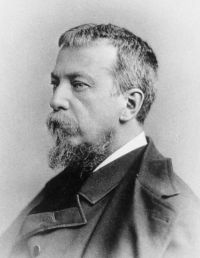
Portrait of S. Weir Mitchell S. Weir Mitchell The Autobiography of a Quack, and The Case of George Dedlow

I concluded that it would be at a minimum, and that, if utter loss of relation to the outer world were capable of destroying a man’s consciousness of himself, the destruction of half of his sensitive surfaces might well occasion, in a less degree, a like result, and so diminish his sense of individual existence.
I thus reached the conclusion that a man is not his brain, or any one part of it, but all of his economy, and that to lose any part must lessen this sense of his own existence.
Source: Gutenberg

Portrait of S. Weir Mitchell S. Weir Mitchell The Autobiography of a Quack, and The Case of George Dedlow

In space, no doubt, exist all forms of matter, merely in finer, more ethereal being. You can’t suppose a naked soul moving about without a bodily garment—no creed teaches that; and if its new clothing be of like substance to ours, only of ethereal fineness,—a more delicate recrystallization about the eternal spiritual nucleus,—must it not then possess powers as much more delicate and refined as is the new material in which it is reclad?
Source: Gutenberg

Portrait of S. Weir Mitchell S. Weir Mitchell The Autobiography of a Quack, and The Case of George Dedlow

It is needless to repeat that I never had the least idea of carrying out the ridiculous scheme with which I had deluded File and Stagers, but so far Stagers’s watchfulness had given me no chance to escape.
In a few moments I was outside of the jail gate, and saw my fellow-clergyman, Mr. Stagers, in full broadcloth and white tie, coming down the street toward me. As usual, he was on his guard; but this time he had to deal with a man grown perfectly desperate, with everything to win and nothing to lose.
Source: Gutenberg

Get perspective with Kwize: daily news enlightened by great literature