“ We say that the limb has budded, as if there were a germ of it which develops like the seed of a plant, or as if each transverse portion of the limb, each slice, so to speak, could re-form the slice that follows. ”
Limb
Definition and stakes
A limb, defined as a jointed, muscled appendage of tetrapod vertebrates, plays essential roles in movement, interaction, and adaptation across species. From the human arm’s dexterity to the aquatic flipper’s propulsion, limbs demonstrate remarkable evolutionary flexibility. Authors such as Hippocrates and Edwin George Lutz examined their anatomical mechanics and functional boundaries, while George R.
Fuller Co. focused on prosthetic innovation, highlighting customized design for individual needs. These perspectives, encompassing medical observation, artistic dissection, and engineering, highlight the limb’s dual role as a biological structure and a symbol of human ingenuity in overcoming physical limitations.
Quotes about “limb”
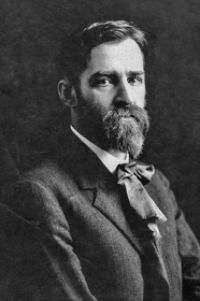 Edwin George Lutz,
Animated cartoons
(1920)
Edwin George Lutz,
Animated cartoons
(1920)
“ Further to simplify our study, we will, at first, consider the mechanism of one limb only. As [102] one foot swings forward and reaches a certain place, it seems to hesitate for an instant and then come down, heel first, on the ground. As the heel strikes, the body is slightly jarred and the oblique line of the limb, its axis, moves and approaches the vertical. In a moment, the limb is vertical as it supports the trunk and the sole of the foot bears on the ground. ”
Dan King, Quackery Unmasked (1858)
“ The Bone-setter extends and flexes, twists and rotates it, until the patient can endure it no longer; and thinking that all must certainly be right after so much agony, he attempts to use the limb—his morbid sensibility has been overcome by the manipulations—he puts his foot to the floor, and, to his own astonishment, he finds he can walk. ”
N.Y.) George R. Fuller Co. (Rochester, The Making of a Man: Being a Description of Artificial Limbs and How They May Be Adopted by Those…
“ No single style of limb is suitable for all cases. Appropriate and distinct construction is necessary, that the limb shall meet the requirements of the person who is to be compelled to wear it. Recognizing the truth of this, we have been led to the study of the peculiarities and individual needs of each case presented to us. Our limbs are constructed with such a variety of joints and attachments that each appliance may be accurately adapted to [10] any variation in the condition or occupation of the patient. ”
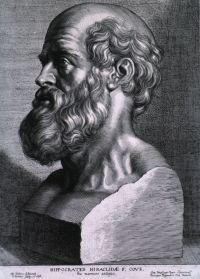 Hippocrates,
On the Articulations
Hippocrates,
On the Articulations
“ Neither does the limb at the groin admit of flexion as in the sound limb, and the head of the bone is felt at the perineum too prominent. These, then, are the symptoms attending dislocation of the thigh inward. ”
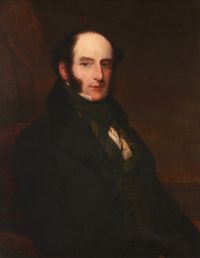 Robert Liston,
Elements of Surgery
Robert Liston,
Elements of Surgery
“ If no means are taken to replace the bone, and painful feelings subside along with the swelling, the limb remains long useless, and is the seat of occasional lancinating pains, but at last motion and utility are to a certain extent restored by the formation of a new joint—the head of the bone, and the parts on which it rests, mutually accommodating themselves to each other, by degrees, and permitting a limited extent of motion. ”
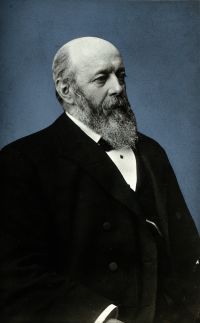 John Gray McKendrick,
Life in Motion
(1892)
John Gray McKendrick,
Life in Motion
(1892)
“ In a section of a limb, such as you find at any butcher's stall, you see the masses of red flesh imbedded in fat and loose tissue. These masses of red flesh are the muscles. But if we dissect a limb, we find that the muscles are beautiful organs, adapted, as regards form and length and bulk, to the work each has to perform. ”
 Francis Galton,
Popular Science Monthly
(1884)
Francis Galton,
Popular Science Monthly
(1884)
“ Every limb shrinks sensibly in volume from this withdrawal of the blood, and the shrinkage of any one of them, say the right arm, is measured by the fall of water in a gauge that communicates with a long bottleful of water, through the neck of which the arm has been thrust, and in which it is softly but effectually plugged. ”
William James, The Principles of Psychology, Volume 2…
“ To establish the part they play in our geometrizing, it is necessary to review a few facts. It has long been known by medical practitioners that, in patients with cutaneous anæsthesia of a limb, whose muscles also are insensible to the thrill of the faradic current, a very accurate sense of the way in which the limb may be flexed or extended by the hand of another may be preserved. ”
 Erasmus Darwin,
Zoonomia, or, the Laws of Organic Life…
(1796)
Erasmus Darwin,
Zoonomia, or, the Laws of Organic Life…
(1796)
“ After the amputation, of a foot or a finger, it has frequently happened, that an injury being offered to the stump of the amputated limb, whether from cold air, too great pressure, or other accidents, the patient has complained, of a sensation of pain in the foot or finger, that was cut off. Does not this evince that all our ideas are excited in the brain, and not in the organs of sense? ”
Frederick Gymer Parsons, 1911 Encyclopædia Britannica (1911)
“ The upper limb in man may be subdivided into a proximal part or shoulder, a distal part or hand, and an intermediate shaft, which consists of an upper arm or brachium, and a forearm or ante-brachium. In each of these subdivisions certain bones are found : in the shoulder, the clavicle and scapula ; upper arm, the humerus; in the forearm, the radius and ulna, the bone of the upper arm in man being longer than the bones of the forearm ; in the hand, the car- pal and metacar- pal bones and the phalanges. ”
 William Henry Flower,
Popular Science Monthly
(1885)
William Henry Flower,
Popular Science Monthly
(1885)
“ All we know of the origin of limbs shows that they commence as outgrowths upon the surface of the body, and that the first-formed portions are the most distal segments. The limb, as proved by its permanent state in the lowest vertebrates, and by its embryological condition in higher forms, is at first a mere projection or outward fold of the skin, which, in the course of development, as it becomes of use in moving or supporting the animal, acquires the internal framework which strengthens it and perfects its functions. ”
 A. T. Still,
Philosophy of Osteopathy
A. T. Still,
Philosophy of Osteopathy
“ To illustrate, we will take the lower limb, whether there is lameness, soreness, gouty, rheumatic, neuralgic, swollen, shrunken, feverish, cold, smooth and glassy, sores, ulcers, erysipelas, milkleg, varicose veins, or any defect that the patient may complain of, who is the only reliable book or being of symptomatology. For convenience we will divide that lower limb into five parts, the foot, leg, thigh, pelvis and lumbar region. The patient (symptomatologist) tells us he has a pain in front, center and under part of foot. ”
 Joseph Priestley,
Heads of Lectures on a Course of Experimental Philosophy…
Joseph Priestley,
Heads of Lectures on a Course of Experimental Philosophy…
“ The nerve of the limb of an animal being laid bare, and surrounded with a piece of sheet lead, or of tinfoil, if a communication be formed between the nerve thus armed and any of the neighbouring muscles, by means of a piece of zinc, strong contractions will be produced in the limb. ”
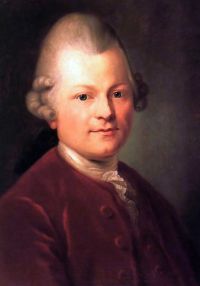 Gotthold Ephraim Lessing,
The Dramatic Works of G. E. Lessing
Gotthold Ephraim Lessing,
The Dramatic Works of G. E. Lessing
“ With eager hand will I part limb from limb, vein from vein, nerve from nerve, and will not cease to cut and burn the very smallest of them, even when there is nothing remaining but a senseless carcass! ”
William James, The Principles of Psychology, Volume 2…
“ This movement of the whole limb is what we think of when the joint's nerves are excited in that way; and its place is so much more important than the joint's place that our sense of the latter is taken up, so to speak, into our perception of the former, and the sensation of the movement seems to diffuse itself into our very fingers and toes. But by abstracting our attention from the suggestion of the entire extremity we can perfectly well perceive the same sensation as if it were concentrated in one spot. ”
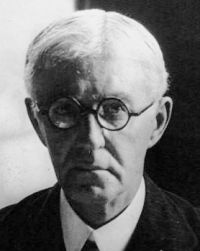 Peter Chalmers Mitchell,
1911 Encyclopædia Britannica, Volume 10…
(1911)
Peter Chalmers Mitchell,
1911 Encyclopædia Britannica, Volume 10…
(1911)
“ Starting from the well-known fact that the habitual use of a limb tends to develop the muscles of the limb, and to produce a greater and greater facility in using it, he made the general assumption that the effort of an animal to exert an organ in a given direction tends to develop the organ in that direction. ”
George Grant, A Historical Account of Useful Inventions and Scientific Discoveries
“ The fulcrum of the upper limb is itself moveable upon the trunk, as appears from the extensive motions of the scapula, which so generally accompany the rotation of the shoulder, and supply the limb with a great variety of motion, much more than the lower limb possesses. ”
Popular Science Monthly (1880)
“ The most striking features of the limbs are the presence of three bones next below the humerus and the femur and articulating with them, corresponding apparently with the radius, intermedium, and ulna in the fore-limb, and with the tibia, intermedium, and fibula in the hinder limb, and the fact of six digits. ”
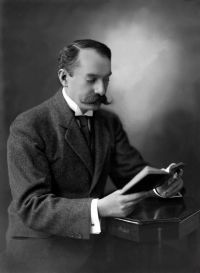 Maurice Renard,
New Bodies for Old
Maurice Renard,
New Bodies for Old
“ It is well known that those who have had a limb amputated, suffer a great deal, and refer their suffering to the extreme periphery of the severed nerves, that is to say, to the limb which they have lost, and which they think they still possess. ”
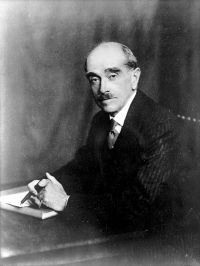 C. J. S. Thompson,
The Mystery and Romance of Alchemy and Pharmacy
C. J. S. Thompson,
The Mystery and Romance of Alchemy and Pharmacy
“ When any physician, doctor, or amulet-maker puts his fingers upon the top of the head, upon the occiput, upon the hands, upon the chest, upon the arms, upon the legs, he communicates (?) with the heart, for its vessels extend to every limb, wherefore it is called the starting-point of every limb. ”
Edward Adams, Surgery, with Special Reference to Podiatry
“ This may soon be absorbed and with it the articular ends of the bones wear away and break down into small fragments. The limb becomes atrophied and shrunken, and the joint itself becomes weak, often flail. ”
 Herbert Spencer,
Popular Science Monthly
(1872)
Herbert Spencer,
Popular Science Monthly
(1872)
“ Throw upon that limb extra function, and within moderate limits it will increase in strength and bulk. If the extra function begins early in life, the limb may be raised considerably above its usual size ”
Various, Popular Science Monthly (1886)
“ It is easy to understand, too, how a complex part, as an entire limb, may be increased as a whole by the simultaneous due increase of its co-operative parts; since if, while it is growing, the channels of supply bring to the limb an unusual quantity of blood, there will naturally result a proportionately greater size of all its components—bones, muscles, arteries, veins, etc. ”
Popular Science Monthly (1880)
“ A limb is broken, or a skull is trepanned, and the limb becomes as strong as ever, and the skull retains whatever brain it may have had within it, in virtue of new efforts of nature exactly adapted to the wants ”
Mrs. Beeton, The Book of Household Management
“ The limb may be shorter or longer than usual, and is stiff and unable to be moved, differing in these last two respects from a broken limb, which is mostly shorter, never longer, than usual, and which is always more movable.—Treatment. ”
 Leonardo da Vinci,
The Notebooks of Leonardo Da Vinci
(1478 – 1519)
Leonardo da Vinci,
The Notebooks of Leonardo Da Vinci
(1478 – 1519)
“ The painter who is familiar with the nature of the sinews, muscles, and tendons, will know very well, in giving movement to a limb, how many and which sinews cause it; and which muscle, by swelling, causes the contraction of that sinew; and which sinews, expanded into the thinnest cartilage, surround and support the said muscle. ”
Robert Liston,
Elements of Surgery
“ Again, and particularly in adults, the limb is easy only in certain positions, and cannot be moved without great suffering; pain is also complained of in the groin, and often immediately behind the trochanter major. ”
 Alexis Thomson,
Manual of Surgery, Sixth Edition…
(1921)
Alexis Thomson,
Manual of Surgery, Sixth Edition…
(1921)
“ Those at the knee, for example, contribute more to the length of limb than do those at the hip or ankle, and they are also the last to unite. In the upper limb the more active epiphyses are at the shoulder and wrist, and these also are the last to unite. ”
Robert Liston,
Elements of Surgery
“ The limb is often enormously swollen and indurated. The gelatinous effusion beneath the periosteum speedily becomes organised, nodules of osseous matter project into it, and adhere to the surface of the bone frequently by a narrow neck; these increase in number, gradually assume a solid appearance: the bone is thus thickened, often to a very great extent. ”
 Joseph Bell,
A Manual of the Operations of Surgery
Joseph Bell,
A Manual of the Operations of Surgery
“ B. Age of Patient.—It must be remembered that excision in a child removes the epiphyses by which in great measure the growth of the bone is to be managed, and the stunted limb, especially in the leg, will eventually be of little advantage, though after the operation it looked excellently well, if a few years later it be found to be seven or eight inches shorter than its neighbour. ”
 William Benjamin Carpenter,
Popular Science Monthly
(1873)
William Benjamin Carpenter,
Popular Science Monthly
(1873)
“ The sensations are real to them. You know that, when a man has suffered amputation of his leg, he will tell you at first that he feels his toes, that he feels his limb; and, perhaps to the end of his life, every now and then he will have this feeling of the limb moving, or of a pain in it ”
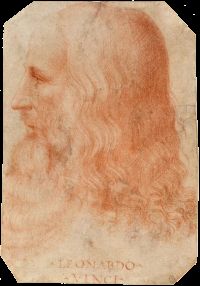 da Vinci Leonardo,
The Notebooks of Leonardo Da Vinci…
(1888)
da Vinci Leonardo,
The Notebooks of Leonardo Da Vinci…
(1888)
“ Which are the parts of the limbs of the human frame where no amount of fat makes the flesh thicker, nor any degree of leanness ever diminishes it?The thing sought for in this question will be found in all the external joints of the bones, as the shoulder, elbow, wrists, finger-joints, hips, knees, ankle-bone and toes and the like; all of which shall be told in its place. The greatest thickness acquired by any limb is at the part of the muscles which is farthest from its attachments.Flesh never increases on those portions of the limb where the bones are near to the surface. ”
Furneaux Jordan, Body, Parentage and Character in History…
“ If a bodily limb even, a mere hand or foot, be fettered and palsied, the body itself either dies or droops into a smaller way of life. It is so with a mental limb—a mental hand or foot in relation to the mental life. ”
“ Otherwise the whole limb will harden into a straight and unbendable condition, worse than its original bend. When the fastenings are removed, then, each day, let the limb be rubbed and bathed for an hour. ”
 H. G. Wells,
The Invisible Man
(1897)
H. G. Wells,
The Invisible Man
(1897)
“ First came the little white nerves, a hazy grey sketch of a limb, then the glassy bones and intricate arteries, then the flesh and skin, first a faint fogginess, and then growing rapidly dense and opaque. ”
Robert Liston,
Elements of Surgery
“ The limb is retained in this position by the application of a straight splint behind, hollowed at the extremities, extending from a little below the tuberosity of the ischium to below the middle of the leg, and retained by a roller, not at all tight;583 the foot and lower part of the limb must be previously bandaged to prevent infiltration. All apparatus with straps, buckles, and apertures to receive the portions of the bone, are worse than useless. ”
Chautauqua Institution, The Chautauquan, Vol. 04, February 1884…
“ A. That any limb, or any part of it, can be developed from a state of weakness and deficiency to one of fullness, strength, and beauty, and that equal attention to all the limbs, and to the body as well, will work like results throughout. ”
Alexis Thomson,
Manual of Surgery, Sixth Edition…
(1921)
“ There may be a feeling of weight in the limb, and in the case of the knee and ankle the patient tires on walking and drags the leg with more or less of a limp. Movements of the joint are permitted, but are limited in range. ”
Abbot of Eynsham Aelfric, The Homilies of the Anglo-Saxon Church
“ We may see in our own bodies how each limb serves another. The feet bear the whole body, and the eyes lead the feet, and the hands prepare the sustenance. Soon will the head lie down, if the feet bear it not ”
 John Timbs,
Knowledge for the Time
John Timbs,
Knowledge for the Time
“ The division of the nerves of a limb causes the muscles of the limb to be paralysed, or, in other words, withdraws them from the influence of the will; the division of the spinal cord destroys at once the sensibility and the power of voluntary motion in all the parts below that at which the division has been made. ”
Albert F. Blaisdell, A Practical Physiology: A Text-Book for Higher Schools
“ The entire circumference of the limb may be constricted by any sort of elastic band or rubber tube, or any other strong elastic material passed around the limb several times on a stretch, drawn tight and tied in a knot. ”
Alexander Miles, Manual of Surgery Volume First…
“ In examining the limb, attention should first be directed to the state of the main blood vessels, in order to determine if the vascular supply of the part beyond the lesion is sufficient to maintain its vitality. ”
W. H. Maxwell, The Field Book: or, Sports and pastimes of the United Kingdom
“ The faulty limb appears to keep pace with the others, but no stress or labour is thrown upon it, and he gradually contrives to make the sound limbs perform among them all the duties of the unsound one ”
Robert Liston,
Elements of Surgery
“ By the application of great force, as by a rope being twisted round and run tight on the limb, both bones and soft parts may be reduced almost to a pulp, without much or any division of the integument. ”
“ Then the gentle pressure and squeezing must be carried all down the limb, avoiding any degree of pain, until all its muscles have had their share. While progressing down the limb with his rubbing, let the rubber be careful that the individual strokes of his hands be upwards, towards the hip. The blood will thus be propelled towards the heart, while the stimulus of rubbing is conveyed along the nerve trunks towards the foot. ”
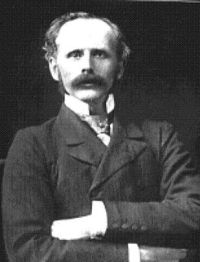 Henry Drummond,
Natural Law in the Spiritual World
Henry Drummond,
Natural Law in the Spiritual World
“ If, by tying its main artery, we stop most of the blood going to a limb, then, for as long as the limb performs its functions, those parts which are called into play must be wasted faster than they are repaired: whence eventual disablement. ”
Related terms
Authors who wrote about “limb”
Robert ListonEdwin George LutzJohn KirkAlexis ThomsonN.Y.) George R. Fuller Co. (RochesterAlexander MilesHippocratesCharles Stuart MoodyJoseph BellWilliam Henry FlowerRobert Alexander CraigLeonardo da Vincida Vinci LeonardoHerbert SpencerWilliam JamesErasmus DarwinH. G. WellsDan KingA. DastreFrederick Gymer Parsons