Bandage

Definition and stakes

Berkeley Hill,  The essentials of bandaging (1869)

“ The patient is laid on his back, a slip-knot made in the middle of the bandage and passed over the wrist; the hand is then made to grasp the foot, the thumb above, the fingers under the sole (fig. 92) ; one end of the bandage is carried behind and inside the ankle to the dorsum of the foot, where it meets the other end passing in front of the ankle. The ends are then carried under the sole, brought up and tied in a double bow over the back of the hand.
Bedsores are best treated by great cleanliness, and by washing the skin exposed to the discharges with spirit of wine every day.
”

Source: Gutenberg

Berkeley Hill,  The essentials of bandaging (1869)

“ The splints are next adjusted and moulded to the limb, being temporarily secured by a few ends of bandage tied round them. One assistant grasps the splints and foot at the ankle and keeps up extension, while another holds the thigh. The surgeon then proceeds to roll the bandages, first round the foot and ankle, and then up the leg, rubbing in the warm starch as he proceeds. ”
Source: Gutenberg

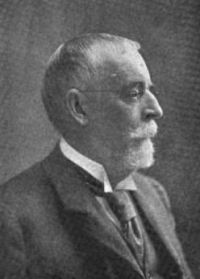
Portrait of Robert Liston Robert Liston,  Elements of Surgery

“ The bandage ought to encircle not only the wounded part, but every part of the limb with a uniform tightness, not so great as to arrest the general circulation; the parts are thereby supported, and engorgement prevented. This method, when employed previously to the effusion of much blood into the cellular tissue, has proved effectual in wounds even of the brachial, femoral, and carotid arteries. When blood has been extensively injected into the limb, when the aperture in the vessel has remained pervious, and when a large diffused aneurism exists, bandaging is worse than useless. ”
Source: Gutenberg

Get perspective with Kwize: daily news enlightened by great literature