Syncope

Definition and stakes

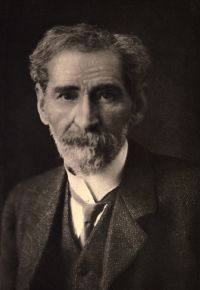
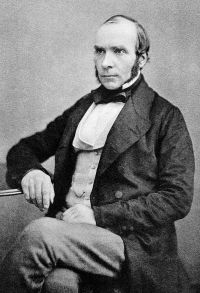
Portrait of John Snow John Snow,  On chloroform and other anæsthetics… (1858)

“ Fear probably occasions each kind of syncope in different cases. In some cases, the right cavities of the heart become distended owing to impeded respiration, and possibly to a diminution of power in the heart itself. More frequently, the syncope appears to be of the ordinary or anæmic kind, the effect of the mental condition acting first on the more distant parts of the circulation. ”

Source: Gutenberg

Portrait of John Snow John Snow,  On chloroform and other anæsthetics… (1858)

“ In cardiac syncope, on the other hand, the cavities of the heart, or at all events the right cavities of this organ, are always full, whether the syncope depend on paralysis of the heart by a narcotic, or inherent weakness of its structure, or on its being overpowered by the quantity of blood with which it is distended. After death from this kind of syncope, if the blood have not been displaced by artificial respiration or other causes, the right cavities of the heart and the adjoining great veins will be found filled with blood, and the lungs will in many cases be more or less congested. ”
Source: Gutenberg

James Barr,  Popular Science Monthly (1885)

“ Death from syncope may be associated with any mode of hanging, but is perhaps most frequently connected with the long drop. It is about the most rapid and least painful, though perhaps the rarest form of death. In a case of syncope, I have seen the heart's action cease in two minutes from the time the bolt was drawn. Fear largely contributes to this mode of death.
It now remains for us to consider death by dislocation or fracture of the cervical vertebræ, with consequent laceration of the spinal cord.
”
Source: Wikisource

Get perspective with Kwize: daily news enlightened by great literature