“ Only a very young poet could have had the courage to charge it with such a weight of symbolism; but he had contrived to breathe into his symbols the breath of life; the phantoms of his brain, a shadowy Helen and Achilles, turned into flesh and blood under his hands. It was as if their bodies, warm, throbbing, full-formed, instinct with irresistible and violent life, had come crashing through the delicate fabric of his dream.As she read Lucia's mind was troubled, shaken out of its critical serenity. She heard a new music; she felt herself in the grasp of a new power, a new spirit. ”
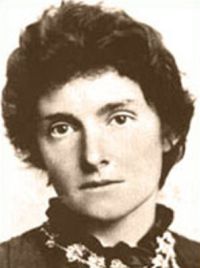
May Sinclair
Biographical details

May Sinclair (1863–1946), the pseudonym of Mary Amelia St. Clair, was a British novelist, suffragist, and literary critic whose work examined feminism, psychological complexity, and modernist innovation. Active in the Women Writers’ Suffrage League, she questioned gender roles and class conflicts in her fiction, while her critical essays first introduced the term "stream of consciousness" to describe Dorothy Richardson’s Pilgrimage.
Her novels, such as The Combined Maze (1913)—praised by George Orwell—and Mary Olivier: A Life (1919), combined psychological realism with philosophical exploration, reflecting her fascination with idealism and psychoanalysis. Sinclair’s supernatural tales, including Uncanny Stories (1923), demonstrated her narrative precision, while her wartime writings and feminist pamphlets highlighted her dedication to social change. Her legacy persists as a bridge between Victorian traditions and modernist experimentation.
Quotes by May Sinclair
“ Her very body was changing into the beauty of her motherhood. The sweetness of her face, arrested in its hour of blossom, had unfolded and flowered again. Her mouth had lost its sad droop, and for Peggy there came many times laughter, and many times that lifting of the upper lip, the gleam of the white teeth, and the play of the little amber mole that Majendie loved and Anne was ashamed of.She had become for her child that which she had been for her husband in her strange, immortal moments of surrender, a woman warmed and transfigured by a secret fire. ”
 May Sinclair,
The Three Sisters
May Sinclair,
The Three Sisters
“ And Mary's mouth, with its wide, turned back lips, had lost its subtlety, it had coarsened slightly and loosened, under her senses' continual content.Gwenda brushed Mary's mouth lightly with the winged arch of her upper lip. Mary laughed."You don't know how to kiss," she said. "If you're going to treat Baby that way, and Molly too—"Gwenda stooped over the soft red down of the baby's head. To Gwenda it was as if her heart kept her hands off Rowcliffe's children, as if her flesh shrank from their flesh while her lips brushed theirs in tenderness and repulsion. ”