Summary

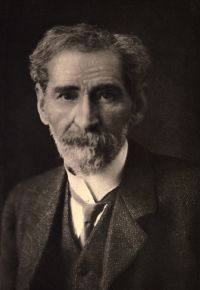
Portrait of W. H. Hudson W. H. Hudson The Naturalist in La Plata

Now, in summer, to a dry spot of ground like this, comes a small wasp, scarcely longer than a blue-bottle fly, body and wings of a deep shining purplish blue colour, with only a white mark like a collar on the thorax. It flirts its blue wings, hurrying about here and there, and is extremely active, and of a slender graceful figure--the type of an assassin. It visits and explores every crack and hole in the ground, and, if you watch it attentively, you will at length see it, on arriving at a hole, give a little start backwards. It knows that a spider lies concealed within.
Source: Gutenberg

Portrait of W. H. Hudson W. H. Hudson The Naturalist in La Plata

Yet, if one is brought to a tree, it will take to it as readily as a duck to water, or an armadillo to earth, climbing up the trunk and about the branches with a monkey-like agility. How reluctant Nature seems in some cases to undo her own work! How long she will allow a specialized organ, with the correlated instinct, to rest without use, yet ready to flash forth on the instant, bright and keen-edged, as in the ancient days of strife, ages past, before peace came to dwell on earth!
Source: Gutenberg

Portrait of W. H. Hudson W. H. Hudson The Naturalist in La Plata

In the Troupials, a family of starling-like birds numbering about one hundred and forty species, there are many that accompany singing with pretty or grotesque antics. The male screaming cow-bird of La Plata, when perched, emits a hollow-sounding internal note that swells at the end into a sharp metallic ring, almost bell-like: this is uttered with wings and tail spread and depressed, the whole plumage being puffed out as in a strutting turkey-cock, while the bird hops briskly up and down on its perch as if dancing.
Source: Gutenberg

Get perspective with Kwize: daily news enlightened by great literature