“ As the head peers out from the membrane, contracted about the body and investing it as in a bag, and the strange creature chews a piece of apple presented by its keeper, the least curious observer must be struck with the peculiarity of the position, and cannot fail to admire the velvety softness and great elasticity of the membrane which forms its wings. ”
Membrane
Definition and stakes
A membrane is a thin, selective barrier that separates two fluids or structures, permitting the controlled movement of molecules or ions. This concept, central to biology and technology, has been examined by thinkers such as Stéphane Leduc, who characterized membranes as osmotic filters influencing cellular development, and Xavier Bichat, who outlined the role of serous membranes in the exchange of bodily fluids.
Erasmus Darwin associated membranes with absorption processes, while Aristotle's observations provided early insights into biological boundaries. These diverse perspectives—ranging from physiological to philosophical—emphasize membranes not only as physical entities but also as symbols of division and permeability, connecting natural and artificial systems.
Quotes about “membrane”
 Stéphane Leduc,
The Mechanism of Life
Stéphane Leduc,
The Mechanism of Life
“ The membranogenous substance, the chloride of calcium, diffuses uniformly on all sides from the solid nucleus, and forms an osmotic membrane where it comes into contact with the solution. This spherical membrane is extended by osmotic pressure, and grows gradually larger. Since the area of the surface of a sphere increases as the square of its radius, when the cell has grown to twice its original diameter, each square centimetre of the membrane will receive by diffusion but a quarter as much of the membranogenous substance. ”
Stéphane Leduc,
The Mechanism of Life
“ All we can say is that certain membranes are more permeable to water than to the substances in solution, and are moreover very unequally permeable to the various substances in solution. As a rule a membrane is much more permeable to a solute whose molecule is of small dimensions. Molecules of salt, for instance, pass through such a membrane much more quickly than do those of sugar. ”




Related terms
Authors who wrote about “membrane”
 Xavier BichatStéphane LeducA. B. Granville
 Adrien GuébhardHarden Franklin Taylor
 Henry Cadwalader ChapmanFrancis M. Balfour
 Erasmus DarwinTheodore Freylinghuysen Collier
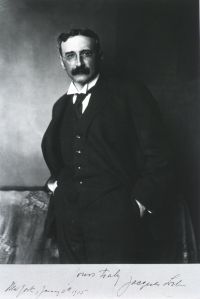 Jacques Loeb
 A. S. PackardCalvin CutterJoel Dorman SteeleS. P. SackettVarious
 Charles Darwin
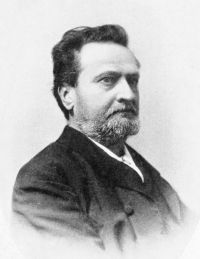 Julius von Sachs
 D'Arcy Wentworth ThompsonThomas Wood
 Aristotle