Protoplasm

Definition and stakes

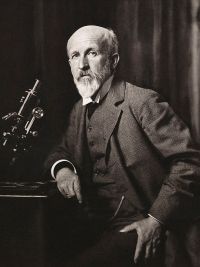
Herbert George Flaxman Spurrell,  The commonwealth of cells

“ It is, of course, the ambition of the physiologist to make protoplasm, but so far he has got no further than making some of the complicated bodies into which protoplasm breaks up when it dies. A little while ago this bare possibility was loudly derided, but the advance in organic chemistry has been so great of late years, and so many complicated substances which once seemed as unobtainable as protoplasm itself have been made in the laboratory, that we now have hope of a precise knowledge of the chemistry of life some day, though that day may be yet very distant. ”
Source: Gutenberg

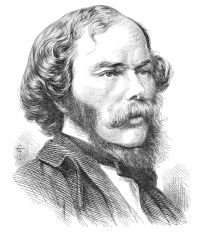
Albert F. Blaisdell,  A Practical Physiology: A Text-Book for Higher Schools

“ Protoplasm has the power of appropriating nutrient material, of dividing and subdividing, so as to form new masses like itself. When not built into a tissue, it has the power of changing its shape and of moving from place to place, by means of the delicate processes which it puts forth. Now, while there are found in the lowest realm of animal life, organisms like the amœba of stagnant pools, consisting of nothing more than minute masses of protoplasm, there are others like them which possess a small central body called a nucleus. ”
Source: Gutenberg

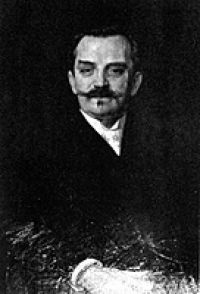
Portrait of George McCready Price George McCready Price,  Q. E. D., or New Light on the Doctrine of Creation

“ All separate masses of protoplasm, such as the one-celled amoeba or the individual cells of our own bodies, are constantly taking in food and as constantly throwing off wastes. Hence, in the very nature of things, it is impossible to find any mass of protoplasm absolutely pure. And a further and impassable barrier to chemical analysis, or indeed to any adequate scientific examination, lies in the fact that we can never deal with protoplasm exactly as it is, since no analysis can be performed upon it without destroying its life. ”
Source: Gutenberg

Get perspective with Kwize: daily news enlightened by great literature