Chloroplast

Definition and stakes

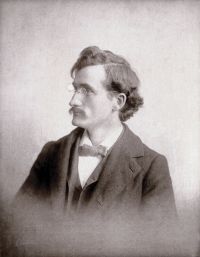
Portrait of Douglas Houghton Campbell Douglas Houghton Campbell,  Elements of Structural and Systematic Botany

“ With a higher power, each cell (Fig. 11, A) is seen to have a distinct cell wall, within which is colorless protoplasm. Careful examination shows that the chlorophyll is confined to several roundish bodies that are not usually in immediate contact with the wall of the cell. These green masses are called chlorophyll bodies (chloroplasts) . Toward the centre of the cell, especially if it has first been treated with iodine, the nucleus may be found. The size of the cells, as well as the number of chloroplasts, varies a good deal. ”
Source: Gutenberg

George W. Hunter,  A Civic Biology, Presented in Problems

“ In the protoplasm of such cells are found a number of little green-colored bodies, which are known as chloroplasts or chlorophyll bodies. If we place the leaf in wood alcohol, we find that the bodies still remain, but that the color is extracted, going into the alcohol and giving to it a beautiful green color. The chloroplasts are, indeed, simply part of the protoplasm of the cell colored green. These bodies are of the greatest importance directly to plants and indirectly to animals. ”
Source: Gutenberg

Portrait of Douglas Houghton Campbell Douglas Houghton Campbell,  Elements of Structural and Systematic Botany

“ Where the leaf is one cell thick, the cells are oblong in form, becoming narrower as they approach the midrib and the margin. They contain numerous chloroplasts imbedded in the layer of protoplasm that lines the wall. The nucleus (Fig. 63, C, n) may usually be seen without difficulty, especially if the leaf is treated with iodine. This plant is one of the best for studying the division of the chloroplasts, which may usually be found in all stages of division (Fig. 63, D) . ”
Source: Gutenberg

Get perspective with Kwize: daily news enlightened by great literature