Algae

Definition and stakes

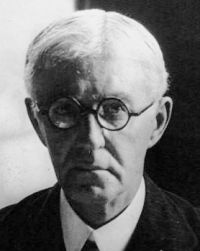
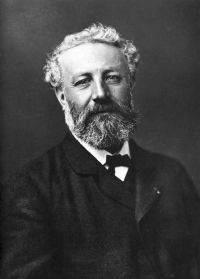
Portrait of A. C. Seward A. C. Seward,  Fossil plants, Vol. 1: [A text-book… (1898)

“ Around the coast-line of land areas, and on the floor of shallow seas algae exhibit a remarkable wealth of form and luxuriance of growth. As regards habit and structure, there is every gradation from algae in which the whole individual consists of a thin-walled unseptate vesicle, to those in which the thallus attains a length unsurpassed by any other plant, and of which the anatomical features clearly express a well-marked physiological division of labour such as occurs in the highest plants. ”
Source: Gutenberg

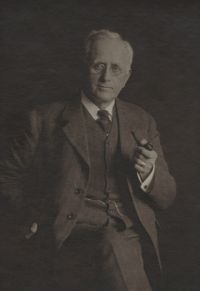
Portrait of Eleanor Stackhouse Atkinson Eleanor Stackhouse Atkinson,  The How and Why Library — Section IV (1915)

“ There, a scientist who has made a study of life in plants and animals, says: "The liver-worts were probably derived from the algae and, in turn, have given rise to mosses and ferns."
Very likely this is the way the algae managed to turn into liver-worts. You remember the algae learned to cling to rocks, to spread into feathery fronds and to grow bud cells or spores. These are hints of roots and leaves and seeds. If you lift a frond of sea
weed from the water the hair-like cells will all fall together, so they look to be one narrow blade-like leaf.
”
Source: Wikisource

Various,  Popular Science Monthly (1903)

“ Among the remaining groups of algae, and containing by far the greatest portion of this class, are a number of orders and families comprising isogamous and heterogamous forms clearly related in various ways to one another, by vegetative structure and similar life-histories, but offering a wide range of variation in the form and habits of the sexual cells. And it is among these algae that we may find material upon which to base general conclusions on the sexual evolution of plants. ”
Source: Wikisource

Get perspective with Kwize: daily news enlightened by great literature