Summary

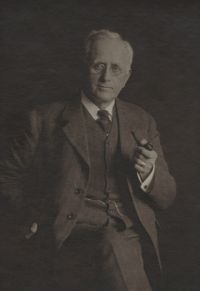
Portrait of A. C. Seward A. C. Seward Fossil plants, Vol. 1: [A text-book… (1898)

The statement is occasionally made that the numerous fossil algae and the absence of higher plants in the older strata justify the description of the oldest rocks as belonging to the ‘age of algae.’ Such an assertion rests on an unsound basis, and is rather the expression of what might be expected than what has been proved to be the case. The oldest plants with which we are at all closely acquainted are of such a type as to forcibly suggest that in the lowest fossiliferous rocks we are still very far from the sediments of that age which witnessed the dawn of plant life.
Source: Gutenberg

Portrait of A. C. Seward A. C. Seward Fossil plants, Vol. 1: [A text-book… (1898)

Without recourse to the evidence afforded by the plants of past ages, we must always admit that our existing classification of the vegetable kingdom is an expression of real gaps which separate the several classes of plants from one another. On the other hand our recently acquired and more accurate knowledge of such genera as have been alluded to, has made us acquainted with types of plant structure which enable us to fill in some of the lacunae in our existing classification.
Source: Gutenberg

Portrait of A. C. Seward A. C. Seward Fossil plants, Vol. 1: [A text-book… (1898)

The discovery of a fossil, whether as an impression on the surface of a slab of rock or as a piece of petrified wood, naturally leads us back to the living plant, and invites speculation as to the circumstances which led to the preservation of the plant fragment. There is a certain fascination in endeavouring, with more or less success, to picture the exact conditions which obtained when the leaf or stem was carried along by running water and finally sealed up in a sedimentary matrix.
Source: Gutenberg

Get perspective with Kwize: daily news enlightened by great literature