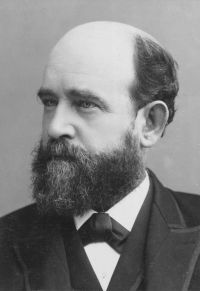
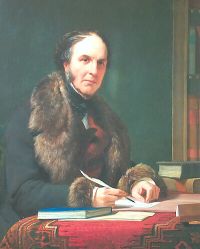
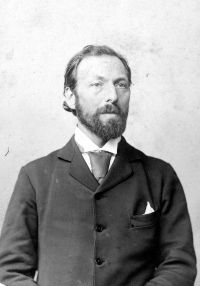
Distribution, an economic concept central to understanding how income, wealth, and output are apportioned among individuals and factors of production, has been a cornerstone of political economy since the 19th century. Authors such as Karl Marx emphasized its role in connecting production and exchange, while Frank A.
Fetter distinguished between functional distribution (allocating value to labor, land, and capital) and personal distribution (the flow of income to individuals). John Stuart Mill analyzed its changes in industrial societies, and John Bates Clark framed it as a result of social organization. These perspectives highlight distribution’s dual role as both a descriptive framework and a tool for addressing equity, reflecting its enduring significance in economic theory and policy.
 Karl Marx,
A Contribution to the Critique of Political Economy
(1904)
Karl Marx,
A Contribution to the Critique of Political Economy
(1904)