 Florence Scovel Shinn,
The Game of Life and How to Play It
(1925)
Florence Scovel Shinn,
The Game of Life and How to Play It
(1925)
“ I told her God was her supply, and that there is a supply for every demand. ”
Demand, a cornerstone of economic and social theory, refers to the desire and capacity to acquire goods or services, influencing markets, prices, and human interaction. From Florence Scovel Shinn’s spiritual assertion that “there is a supply for every demand” to David Ricardo’s economic observation that human wants are “unlimited,” the concept spans philosophical, practical, and metaphysical dimensions.
Authors like Lewis Carroll emphasized demand’s dependence on authentic, informed longing, while Frank Harris provocatively connected it to societal contradictions. Whether viewing it as a driver of innovation, a determinant of value, or a reflection of human need, these perspectives collectively highlight demand’s dual role as both a force of scarcity and a catalyst for progress.
Florence Scovel Shinn,
The Game of Life and How to Play It
(1925)
“ I told her God was her supply, and that there is a supply for every demand. ”
“ But if the demand was for something not yet available, but less impossibly remote than the moon, the housekeeper might persuade the purveyors to cudgel their brains till they had met the need. For, as we know, Necessity, which is another word for Demand, is the mother of invention. ”
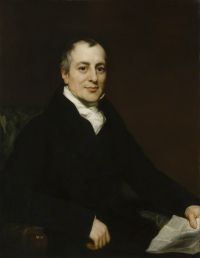 David Ricardo,
Letters of David Ricardo to Thomas Robert Malthus…
David Ricardo,
Letters of David Ricardo to Thomas Robert Malthus…
“ In short, I consider the wants and tastes of mankind as unlimited. We all wish to add to our enjoyments or to our power. Consumption adds to our enjoyments, accumulation to our power, and they equally promote demand. ”
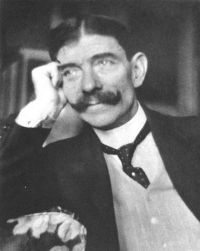 Frank Harris,
Oscar Wilde, His Life and Confessions…
Frank Harris,
Oscar Wilde, His Life and Confessions…
“ I am going to write a Political Economy in my heavier moments. The first law I [Pg 382] lay down is, "Whenever there exists a demand, there is no supply." This is the only law that explains the extraordinary contrast between the soul of man and man's surroundings. ”
 Lewis Carroll,
Euclid and His Modern Rivals
(1885)
Lewis Carroll,
Euclid and His Modern Rivals
(1885)
“ The grounds of the demand then are three; that it is made in earnest, that it is made by those who know what they want, and that it is made by those who are competent to form an opinion on the subject. ”
 Leslie Stephen,
The English Utilitarians, Volume 2…
Leslie Stephen,
The English Utilitarians, Volume 2…
“ If supply and demand corresponds to the whole play of motives which determines the bargain, this is like saying, according to the old illustration, that we must attribute the whole effect of a pair of scissors to one blade and not to the other. ”
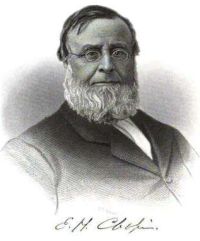 E. H. Chapin,
Humanity in the City
E. H. Chapin,
Humanity in the City
“ But see how essential these agents are to the present condition of civilization. How many derangements among the wheels of business, and the plans of affection, if merely a snow-drift blocks the cars, or a thunder-storm snaps the wires! Our estimate of necessity, and, therefore, of utility, must be formed according to present conditions, and the legitimate demand that rises out of them; these conditions themselves being the necessary developments of society and of the individual. ”
 William Bennett Munro,
Social Civics
(1922)
William Bennett Munro,
Social Civics
(1922)
“ Demand and supply. So we get back, in the end, to the proposition with which we started, that the purpose of economic activity and organization is to supply human needs. Where the need is felt, the demand arises. ”
Aaron Hill, 'Of Genius', in The Occasional Paper…
“ There is a kind of universal law of supply and demand, and the argument is simply that each link in the human chain, like those in the animate and inanimate worlds above and below it, is predestined to a specific function for the better ordering of the whole. ”
 George Saintsbury,
A Letter Book
George Saintsbury,
A Letter Book
“ Simply in that the economy I have taught, in opposition to the popular view, is the science which not merely ascertains the relations of existing demand and supply, but determines what ought to be demanded and what can be supplied. ”
Charles Whiting Baker, Monopolies and the People
“ It is these desires for things which others can produce which constitute demand. It is to be borne in mind that this is a broad term, and includes not only desires for food, clothing, and actual things, but for service of every sort, in short, demand is the desire for any thing whatever for which people are willing to pay money. ”
John Stuart Hay, The Amazing Emperor Heliogabalus (1911)
“ The point is, that what the mass of men demand they will get. It is the usual law of supply and demand, where the man who can increase the demand and satisfy it to any extent is the successful founder of a new religion. ”
 Arnold Bennett,
Mental Efficiency, and Other Hints to Men and Women
Arnold Bennett,
Mental Efficiency, and Other Hints to Men and Women
“ He does not let the supply create the demand. Such a state of affairs would be almost humiliating, almost like the parvenu who calls in the wholesale furnisher and decorator to provide him with a home. ”
William Pare, Equitable Villages in America
“ The adaptation of the supply to the demand, although it is continually governing the bodies of men, seems never to have made its way into their intellects, or they would have made it the governing principle of their arrangements. ”
 Harriet Martineau,
Once a Week
(1860)
Harriet Martineau,
Once a Week
(1860)
“ It seems to be the right course for all of us to look out all our resources, to communicate freely with one another, to understand the case before we blame anybody for it, to admit that demand, supply, and prices must hold their natural course ”
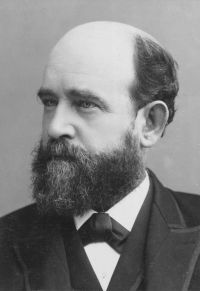 Henry George,
Progress and Poverty (George)…
(1879)
Henry George,
Progress and Poverty (George)…
(1879)
“ What conceals the absurdity of speaking generally of supply and demand in reference to labour is the habit of considering the demand for labour as springing from capital and as something distinct from labour ”
 Frank A. Fetter,
The Principles of Economics, with Applications to Practical Problems
Frank A. Fetter,
The Principles of Economics, with Applications to Practical Problems
“ Demand the Social expression of shifting choice2. Demand is the social aspect of the individual man's comparison of utilities. It is the expression of the man's wish to substitute some of his goods for some one else's goods in order to get a higher satisfaction. This comparison is often made between two goods owned in different quantities. When men are constantly comparing things in their own possession, it is a short step to compare their goods with their neighbor's.Demand for consumption goods is thus the manifestation of the man's desire to redistribute his enjoyments. ”
 William Dean Howells,
Complete Project Gutenberg William Dean Howells Literature Essays
William Dean Howells,
Complete Project Gutenberg William Dean Howells Literature Essays
“ But if you want something in particular—to furnish a house, or buy a suburban place, or take a steamer for Europe, or go, to the theatre—then you find out at once who reads the advertisements, and cares to look at them. They respond to the multifarious wants of the whole community. You have before you the living operation of that law of demand and supply which it has always been such a bore to hear about. As often happens, the supply seems to come before the demand ”
 Alice Henry,
The Trade Union Woman
Alice Henry,
The Trade Union Woman
“ Whatever form the demands of labor organizations may take, the essence of the demand is the same: better terms for the worker always, however temporary circumstances or technical details may obscure the issue. ”
Samuel Butler, Essays on Life, Art and Science
“ These things are as power and desire, or supply and demand, each one of which is continually outstripping, and being in turn outstripped by the other; but, in spite of their close connection and interaction, power is not desire, nor demand supply. ”
 Rabindranath Tagore,
Nationalism
(1917)
Rabindranath Tagore,
Nationalism
(1917)
“ But in the economic world our appetites follow no other restrictions but those of supply and demand which can be artificially fostered, affording individuals opportunities for indulgence in an endless feast of grossness. ”
 Herbert Spencer,
Essays: Scientific, Political, & Speculative…
Herbert Spencer,
Essays: Scientific, Political, & Speculative…
“ Demand and {461} supply, and the desire of each man to gain a living by supplying the needs of his fellows, spontaneously evolve that wonderful system whereby a great city has its food daily brought round to all doors or stored at adjacent shops; has clothing for its citizens everywhere at hand in multitudinous varieties ”
 Arthur Latham Perry,
Principles of Political Economy
Arthur Latham Perry,
Principles of Political Economy
“ Here we reach in the minds and motives of a large class of men an ultimate Demand for laborers, and specially for skilled laborers, which is as true and constant to its legitimate end of Profit as the needle is true and constant to the pole. ”
 William Stanley Jevons,
Political economy
William Stanley Jevons,
Political economy
“ Laws of Supply and Demand. In the next place, we must try to understand how the values of things are governed, and made to change from time to time. The principal laws which govern values are called the laws of supply and demand, and they are very important indeed. ”
 John Stuart Mill,
Principles of Political Economy
(1871)
John Stuart Mill,
Principles of Political Economy
(1871)
“ This theorem, that to purchase produce is not to employ labour; that the demand for labour is constituted by the wages which precede the production, and not by the demand which may exist for the commodities resulting from the production; is a proposition which greatly needs all the illustration it can receive. ”
John Stuart Mill,
Principles of Political Economy
(1871)
“ OF DEMAND AND SUPPLY, IN THEIR RELATION TOVALUE. § 1.That a thing may have any value in exchange, two conditions are necessary. It must be of some use; that is (as already explained) it must conduce to some purpose, satisfy some desire. No one will pay a price, or part with anything which serves some of his purposes, to obtain a thing which serves none of them. But, secondly, the thing must not only have some utility, there must also be some difficulty in its attainment. ”
The Dial (July 1 - December 16, 1893)
“ But for science, history—everything—except, perhaps, poetry—the demand is leaping forward year after year in a most surprising manner. Now, in order to meet this enormous demand, which has actually begun and will increase more and more—a demand which we alone can meet and satisfy—I say that we must claim and that we must have a readjustment of the old machinery a reconsideration of the old methods—a new appeal to principles of equity and fair play. ”
Sir Hubert Douglas Henderson, Supply and Demand
“ But we should never forget that there is no service or commodity produced by man, however essential it may seem, the demand for or the supply of which might not be reduced to nothing, if the price were sufficiently raised on the one hand, or lowered on the other. ”
Boyd Henry Bode, Creative Intelligence: Essays in the Pragmatic Attitude
“ And the "creation of demand," where this is part of the program of speculative enterprise, means the arousal of a "dormant" or implicit desire, in the sense above discussed—there is nothing, at all events, in other parts of current theory to indicate a different conception. The economist will probably contend that what the process of the creation of demand may be is not his but the psychologist's affair; that his professional concern is only whether or not the economic demand, as an objective market fact, be actually forthcoming. ”
Twentieth Century Negro Literature
“ And finally, would it not be highly presumptive and insolent on our part to demand of others that they deliver into our keeping, without price, property which they have purchased with their own money, and of which we have had the use and benefit for a third of a century? ”
John Stuart Mill,
Essays on some unsettled Questions of Political Economy
“ The principle, that value is proportional to cost of production, being consequently inapplicable, we must revert to a principle anterior to that of cost of production, and from which this last flows as a consequence,—namely, the principle of demand and supply. ”
Frank A. Fetter,
The Principles of Economics, with Applications to Practical Problems
“ Demand is desire for goods united with the power to give something in exchange. An example frequently given to show the difference between desire and demand is the hungry boy looking longingly at the sweetmeats in the confectioner's window. He represents desire, but not until the kind-hearted gentleman gives him a nickel does he represent effective demand. Desire, therefore, must be united with power to give something in exchange before it can be called demand. ”
Frank A. Fetter,
The Principles of Economics, with Applications to Practical Problems
“ In demand for goods men virtually say: "Part of what I have I am ready to give for part of what you have." The strength of their desire is expressed by the amount of their offer. When he makes this comparison and this offer, man enters into a social, economic relation with his fellows. ”
 Theodore L. Cuyler,
Recollections of a Long Life: An Autobiography
Theodore L. Cuyler,
Recollections of a Long Life: An Autobiography
“ If the law of demand and supply is as applicable to mental products as it is to the imports of commerce, then we may readily understand that the realm of the ideal, which was ruled by the Wordsworths, Carlyles and Longfellows, should be supplanted by a realm in which the master minds should be political economists, or explorers, or railway kings, or financial magnates, or empire-builders of some description. ”
 W. H. Mallock,
Labour and the Popular Welfare
W. H. Mallock,
Labour and the Popular Welfare
“ They consist also of what may be called the policy of the whole business—the quick comprehension of the fluctuating wants of the consumer, the extent to which these may be led, the extent to which they must be followed, the constant power of adjusting the supply of a commodity to the demand. ”
 Thorstein Veblen,
The Theory of Business Enterprise
(1904)
Thorstein Veblen,
The Theory of Business Enterprise
(1904)
“ The run of business exigencies on which an era of prosperity goes forward may be sketched in its general features somewhat as follows: Increased demand and enhanced prices, with the large contracts which follow from such a state of the market, increase the prospective earnings of the several concerns engaged. ”
Arthur Latham Perry,
Principles of Political Economy
“ Prices, as we have now seen, are only a subordinate form of Values: the universal law that regulates all the variations of them both, within certain fixed limits to be examined shortly, is called the Law of Supply and Demand. ”
Walter John Clark, International Language, Past, Present & Future
“ In the case before us the question of principle involves many considerations—aesthetic, political, social, even religious. These will be glanced at in their proper place; but for our present purpose they are all subordinate to the one great paramount consideration—the economic one. In the world of affairs experience shows that, given a demand of any kind whatever, as between an economical method of supplying that demand and a non-economical method, in the long run the economical method will surely prevail. ”
 Adam Smith,
The Wealth of Nations
(1776)
Adam Smith,
The Wealth of Nations
(1776)
“ A very poor man may be said, in some sense, to have a demand for a coach and six; he might like to have it; but his demand is not an effectual demand, as the commodity can never be brought to market in order to satisfy it. ”
F. A. Paley, Littell's Living Age — Volume 145…
“ Everybody reads now because there are penny papers and an abundance of cheap periodicals; and so again, it is the supply which has given such an immense impulse to the desire to avail ourselves of it. In other words, supply and demand always mutually act and react upon each other. ”
George Ticknor Curtis, Creation or Evolution? A Philosophical Inquiry
“ He did not create the demand for that machine; the demand has grown out of the wants of society; and the artificer has met the demand by his genius and his mechanical skill, which have effected a marked improvement in the condition of society. ”
 Karl Marx,
Das Kapital
(1906)
Karl Marx,
Das Kapital
(1906)
“ Effectual demand consists in the power and inclination (!) , on the part of consumers, to give for commodities, either by immediate or circuitous barter, some greater portion of ... capital than their production costs. ”
John Stuart Mill,
Principles of Political Economy
(1871)
“ It will continually happen, on the voluntary system, that, the end not being desired, the means will not be provided at all, or that, the persons requiring improvement having an imperfect or altogether erroneous conception of what they want, the supply called forth by the demand of the market will be anything but what is really required. ”
James B. Alexander, The Lunarian Professor and His Remarkable Revelations Concerning the Earth…
“ Every one is taught a trade or a profession according to its bent and the demand for services in the several callings, it being the policy of the state to so regulate [118] these things that the value of services is about the same in all callings. ”
Sir James Steuart, An Inquiry into the Principles of Political Oeconomy…
“ The wants of mankind were said to promote their multiplication, by augmenting the demand for the food of the free hands, who, by supplying those wants, are enabled to offer an equivalent for their food, to the farmers who produced it ”
 John Ruskin,
Fors Clavigera (Volume 1 of 8)
John Ruskin,
Fors Clavigera (Volume 1 of 8)
“ The proposition is this—A demand for commodities is not a demand for labour. “The demand for labour depends upon the amount of capital: the demand for commodities simply determines in what direction labour shall be employed. ”
 Robert Green Ingersoll,
The Works of Robert G. Ingersoll…
Robert Green Ingersoll,
The Works of Robert G. Ingersoll…
“ My hope is that in time we shall become civilized enough to know that there is a higher law, or rather a higher meaning in the law of supply and demand, than is now perceived. Year after year what are called the necessaries of life increase. Many things now regarded as necessaries were formerly looked upon as luxuries. So, as man becomes civilized, he increases what may be called the necessities of his life. ”
William Dean Howells,
Criticism and Fiction
“ By another operation of the same law, which political economists have more recently taken account of, the demand follows the supply, and short stories are sought for because there is a proven ability to furnish them, and people read them willingly because they are usually very good. ”
John Ruskin,
Fors Clavigera (Volume 5 of 8)
(1871)
“ Always demand the best materials, and use no more of them than is necessary to dress yourselves neatly or handsomely, according to your station in society. Then have these materials made up by hand, if possible under your own supervision, paying a just price for the labour. ”
John Stuart Mill,
Principles of Political Economy
“ If, from the state of the demand, the two cultivations meet on land more favorable to one than to the other, that one will be cheaper and the other dearer, in relation to each other and to things in general, than if the proportional demand were as we at first supposed. ”
Arthur Latham PerryDavid RicardoFrank A. FetterFlorence Scovel ShinnSir James SteuartWilliam PareCharles Whiting BakerJohn Stuart MillWilliam Dean HowellsWilliam Bennett MunroJohn RuskinGeorge SaintsburyE. H. ChapinLeslie StephenLewis CarrollFrank HarrisAaron HillJohn Stuart HayAlice HenryFrom rare delicacy to everyday staple, tea's journey through mass consumption reveals a radical shift in quality, taste, and the very definition of authenticity. Adulteration, industrialization, and blending didn't just change the brew—they transformed our palates.
The omission of women from history was a direct result of political and intellectual subjugation, legally barring them from education and the elective franchise. Rewriting the historical narrative is therefore an act of political emancipation, fulfilling the suffragists' demands.
