Summary

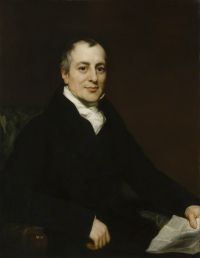
Portrait of David Ricardo David Ricardo Letters of David Ricardo to Thomas Robert Malthus…

When you say that my great mistake is in considering commodities made up of labour alone and not of labour and profits, I think the error is yours, not mine, for that is precisely what you do; you measure commodities by labour alone, which have both labour and profits in them. You surely will not say that my money, produced by labour and capital, and by which I propose to measure other things, omits profits. Yours does; what profits are there in shrimps or in gold picked up by daily labour, on account of the labourer, on the sea-shore?
Source: Gutenberg

Portrait of David Ricardo David Ricardo Letters of David Ricardo to Thomas Robert Malthus…

You suppose that corn would remain at the same price whilst manufactures rose in price,—I on the contrary think that the price of manufactures would continue nearly stationary, whilst the price of corn would fall. Is not this the natural consequence of more capital being employed on manufactures and less on agriculture? Have you not too uniformly supported the opinion that a fall in the price of corn will occasion a fall in the price of commodities? If they act on each other as you think, but to which I do not agree, how can manufactures rise in price with a stationary price of corn?
Source: Gutenberg

Portrait of David Ricardo David Ricardo Letters of David Ricardo to Thomas Robert Malthus…

No doubt to have value a commodity must be useful, but it is the difficulty of its production that is the sole measure of its value. 'The wealthiest man is he who has most values, and who is able, by giving them in exchange, to procure himself not the things which he himself and everybody else regard as the most desirable, and which can be had at a low price, but the things that are difficult to produce and consequently dear.
Source: Gutenberg

Get perspective with Kwize: daily news enlightened by great literature