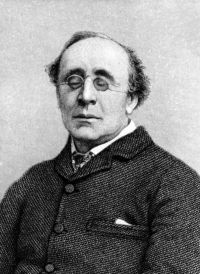
Henry Fawcett

Henry Fawcett

Summary

Portrait of Henry Fawcett Henry Fawcett Manual of Political Economy (1907)

Capital, let it again be borne in mind, is all that wealth, in whatever shape or form it may exist, which is set aside to assist future production. It is true that if, for instance, you ask a farmer how much capital he has with which to work his farm, he will reply that he has so many thousand pounds, but his capital is not actually in money, and even if it were in money it could not fulfil the functions of capital until the money had been exchanged for various commodities. For why does a farmer require capital to work his farm?
Source: Wikisource

Portrait of Henry Fawcett Henry Fawcett Manual of Political Economy (1907)

Thus, capital provides the fund from which the wages of labour are paid, and these wages are, of course, consumed in ministering to the wants of the labourer, and in supplying him with all the various necessaries of life. If a man has so much wheat, it is wealth which may at any moment be employed as capital; but this wheat is not made capital by being hoarded; it becomes capital when it feeds the labourers, and it cannot feed the labourers unless it is consumed. These considerations apply to capital existing even in a more permanent form, such as machinery.
Source: Wikisource

Portrait of Henry Fawcett Henry Fawcett Manual of Political Economy (1907)

No doubt, waste of any kind is to be deplored; but we should not be too prone to regret that so much labour is devoted to provide the pleasures of life, for the happiness of a nation may be in some degree estimated by the time and labour which can be spared for enjoyment: even the labour of those who provide these enjoyments is not altogether unproductive: a man will work with more vigour and efficiency if his mind can be diverted from the routine toil of life.
Source: Wikisource

Get perspective with Kwize: daily news enlightened by great literature