Summary

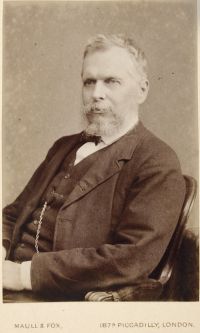
Portrait of Charles Baron Clarke Charles Baron Clarke Speculations from Political Economy

Of all the follies taught to the labouring man the most foolish is the doctrine that the empire abroad is maintained to provide incomes for the rich, at the cost of the taxes paid for wars by the poor. It matters comparatively little to the rich whether they live at Florence or Dresden four or eight months in the year, whether the population of England is to be maintained stationary, to increase at its present rate of increase, or to be squeezed down to half its present number: but it matters vitally to the poor.
Source: Gutenberg

Portrait of Charles Baron Clarke Charles Baron Clarke Speculations from Political Economy

No man in ordinary business will give a price for anything that he intends to sell again unless he expects to profit by selling it again. No capitalist will pay a workman to make a table unless he expects to sell the table for a sum somewhat exceeding the cost of the wood and the workman's labour. It follows directly that the one grand object of the workman, both as an individual, a trade, and a class, should be to improve the efficiency of his labour.
Source: Gutenberg

Portrait of Charles Baron Clarke Charles Baron Clarke Speculations from Political Economy

It is true that there would soon be a second line to Brighton; the present Brighton Company would possibly pay as good a dividend then as they do now. But if they did not, it would only show how they tax the public now as well as hinder trade. I am not bound to show that the monopolists would profit by Free Trade; I deny that the monopolists have any vested interest in their monopoly, or that Parliament, i.e. the nation, has made any covenant with them that their monopoly shall never be invaded.
Source: Gutenberg

Get perspective with Kwize: daily news enlightened by great literature