Summary

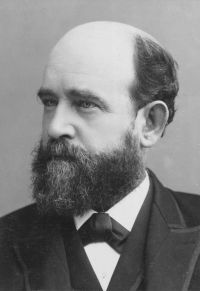
Portrait of Henry George Henry George Progress and Poverty (George)… (1879)

Indeed, it is difficult to resist the impression that some of them really saw this law of wages but, fearful of the practical conclusions to which it would lead, preferred to ignore and cover it up, rather than use it as the key to problems that without it are so perplexing. A great truth, to an age which has rejected and trampled on it, is not a word of peace but a sword!
Source: Wikisource

Portrait of Henry George Henry George Progress and Poverty (George)… (1879)

The primary and fundamental occupations upon which, so to speak, all others are built up, are evidently those which procure wealth directly from nature; hence the law of wages in them must be the general law of wages. And, as wages in such occupations clearly depend upon what labour can produce at the lowest point of natural productiveness to which it is habitually applied, therefore wages generally depend upon the margin of cultivation or, to put it more exactly, upon the highest point of natural productiveness to which labour is free to apply itself without the payment of rent.
Source: Wikisource

Portrait of Henry George Henry George Progress and Poverty (George)… (1879)

The fundamental principle of human action - the law that is to Political Economy what the law of gravitation is to physics - is that men seek to gratify their desires with the least exertion. Evidently this principle must bring to an equality, through the competition it induces, the reward gained by equal exertions under similar circumstances. When men work for themselves, this equalization will be largely effected by the equation of prices; and between those who work for themselves and those who work for others, the same tendency to equalization will operate.
Source: Wikisource

Get perspective with Kwize: daily news enlightened by great literature