Summary

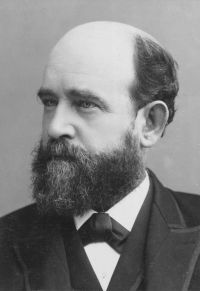
Portrait of Henry George Henry George Progress and Poverty (George)… (1879)

If I buy land for a small price and hold it until I can sell it for a large price, I have become rich, not by wages for my labour or by interest upon my capital, but by the increase of rent. Rent, in short, is the share in the wealth produced which the exclusive right to the use of natural resources gives to the owner. Wherever any land has an exchange value there is rent in the economic meaning of the term. Wherever land having a value is used, either by owner or hirer, there is rent actual; wherever it is not used, but still has a value, there is rent potential.
Source: Wikisource

Portrait of Henry George Henry George Progress and Poverty (George)… (1879)

In common speech, we apply the word rent to payments for the use of buildings, machinery, fixtures, etc., as well as to payments for the use of land or other natural capabilities; and in speaking of the rent of a house or the rent of a farm, we do not separate the price for the use of the improvements from the price for the use of the bare land.
Source: Wikisource

Portrait of Henry George Henry George Progress and Poverty (George)… (1879)

The law of rent is in fact but a deduction from the law of competition and amounts simply to the assertion that as wages and interest tend to a common level, all that part of the general production of wealth which exceeds what the labour and capital employed could have secured for themselves, if applied to the poorest natural agent in use, will go to landowners in the shape of rent. Is it not as plain as the simplest geometrical demonstration that the corollary of the law of rent is the law of wages, where the division of the produce is simply between rent and wages
Source: Wikisource

Get perspective with Kwize: daily news enlightened by great literature