“ In circles highly civilised the great things, the real things, the hard, the cruel and even the tender things, the true elements of any tension and true facts of any crisis, have ever, for the outsider’s, for the critic’s use, to be translated into terms—terms in the distinguished name of which, terms for the right employment of which, more than one situation of the type I glance at had struck me as all irresistibly appealing. ”
Situation
Definition and stakes
The concept of situation refers to the position one occupies within a network of conditions, circumstances, and contextual influences. Authors have long examined its role in shaping human experience: Henry James emphasized its complexity as a crucible for character and conflict, while John Dewey viewed it as a dynamic arena where self-formation occurs through action.
Herbert Butterfield underscored its importance in modern societal tensions, and Frederick William Robertson argued that individuals actively shape their environments rather than passively enduring them. Across literature and philosophy, situation emerges as a framework through which agency, morality, and transformation are explored, revealing its lasting significance in understanding human interaction with the world.
Quotes about “situation”
 Frederick William Robertson,
Sermons Preached at Brighton
Frederick William Robertson,
Sermons Preached at Brighton
“ It is not the situation which makes the man, but the man who makes the situation. ”
Henry James, Notes on Novelists, with Some Other Notes
“ But he is at his best when the conditions, the whole complex of subdivisible form and pressure, are virtually themselves the situation, the action and the interest, or in other words when these things exhaust themselves, as it were, in expressing the persons we are concerned with, agents and victims alike, and when by such vivified figures, whether victims or agents, they are themselves completely expressed. ”
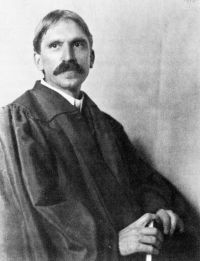 John Dewey,
Democracy and Education
(1916)
John Dewey,
Democracy and Education
(1916)
“ The moment we recognize that the self is not something ready-made, but something in continuous formation through choice of action, the whole situation clears up. ”
Adam Ferguson, An Essay on the History of Civil Society…
“ When we point out, in the situation of a people, circumstances which, by determining their pursuits, regulate their habits, and their manner of life; and when, instead of referring to the supposed physical source of their dispositions, we assign their inducements to a determinate conduct ”
 Herbert Butterfield,
The historical novel
(1924)
Herbert Butterfield,
The historical novel
(1924)
“ The conditions of the life of the present-day, the current habits of thought, the social relationships of men, the economic situation of the country, the welfare of family and Church, and the relations of those institutions and groups that make their conflicting claims upon the loyalty and cover so much of the activity of individuals, are rich with problems and anomalies, and situations and combinations of circumstance which are peculiar to the age, and are the source of most of the issues of the novel of the present-day. ”
Mary Hays, Memoirs of Emma Courtney
“ Whether the incidents, or the characters, are copied from life, is of little importance—The only question is, if the circumstances, and situations, are altogether improbable? If not—whether the consequences might not have followed from the circumstances?—This is a grand question, applicable to all the purposes of education, morals, and legislation—and on this I rest my moral—'Do men gather figs of thorns, or grapes of thistles?' asked a moralist and a reformer. ”
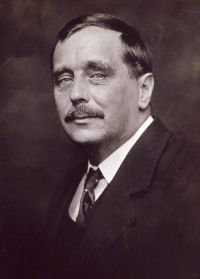 H. G. Wells,
The Outline of History: Being a Plain History of Life and Mankind
H. G. Wells,
The Outline of History: Being a Plain History of Life and Mankind
“ This situation marks a definite stage in the release of man from precedent and usage, and a definite step forward towards the conscious and deliberate reconstruction of his circumstances to suit his needs and aims. ”
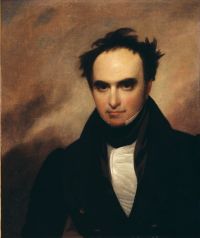 Daniel Webster,
The Great Speeches and Orations of Daniel Webster
Daniel Webster,
The Great Speeches and Orations of Daniel Webster
“ The diversity of new scenes and situations, which so many growing states must necessarily pass through, may introduce changes in the fluctuating opinions and manners of men which we can form no conception of; and not only the gracious disposition of Providence, but the visible preparation of causes, seems to indicate strong tendencies towards a general improvement. ”
John Dewey,
Democracy and Education
(1916)
“ To say that thinking occurs with reference to situations which are still going on, and incomplete, is to say that thinking occurs when things are uncertain or doubtful or problematic. Only what is finished, completed, is wholly assured. ”
Gilbert William Child, Church and State under the Tudors (1890)
“ So vastly do the circumstances of our daily and hourly lives, the atmosphere of the society which we meet, the tone of the books and newspapers which we read, mould every thought which we think and modify every view which we take of the occurrences which surround us, that it is all but an impossibility to judge how those best known to us, or how even we ourselves, would think or speak or act in a set of circumstances widely different from those in which our actual experience has been cast. ”
 Ralph Waldo Emerson,
Essays: First Series — Spiritual Laws
(1841)
Ralph Waldo Emerson,
Essays: First Series — Spiritual Laws
(1841)
“ Why need you choose so painfully your place, and occupation, and associates, and modes of action, and of entertainment? Certainly there is a possible right for you that precludes the need of balance and wilful election. For you there is a reality, a fit place and congenial duties. Place yourself in the middle of the stream of power and wisdom which animates all whom it floats, and you are without effort impelled to truth, to right, and a perfect contentment. ”
 Josiah Royce,
The World and the Individual, First Series
(1899)
Josiah Royce,
The World and the Individual, First Series
(1899)
“ We can define the Other, the true Being, as that which, if present to us in this moment, would end our conflict. In so far it seems something desirable and desired, — an object of longing. On the other hand, we may, and often do, regard Being as that in terms of which our ideas are to be controlled, set right, or, if necessary, wholly set aside as useless. In so far Being appears as a sort of fate, or perhaps as a supreme authority, which judges our ideas and which may thwart them. ”
Emory Adams Allen, The Golden Gems of Life; Or, Gathered Jewels for the Home Circle
“ Every claim of duty, the employment of each minute, the daily vexations or trials we are called upon to bear, the momentary decisions that must be made, the casual interview, the contact with sin or sorrow in every-day dress—all, these and many others as small and as constant, are the real opportunities of life. These we are continually embracing or neglecting, and out of them we are forming a character that is fast consolidating into the shape we gave it for good or for evil. ”
Various, The Atlantic Monthly, Volume 06…
“ The White Pine is a tree that harmonizes with all situations, rude and cultivated, level and abrupt. On the side of the mountain it adds grandeur to the declivity, and gives a look of sweeter tranquillity to the green pastoral meadow. It yields a darker frown to the projecting cliff, and a more awful uncertainty to the mountain-pass or the hollow ravine. Amid desolate scenery it spreads a cheerfulness that detracts nothing from its power over the imagination, while it relieves it of its terrors by presenting a green bulwark to defend us from the elements. ”
 Harriet Martineau,
Illustrations of Political Economy…
(1834)
Harriet Martineau,
Illustrations of Political Economy…
(1834)
“ For a long time past,—ever since I have been in the habit of comparing you and your pursuits with the people about you and their pursuits—ever since I came here,—I have been arriving at my present conviction, that every circumstance of our social condition,—the most trifling worldly interest of the meanest of us,—bears its relation to this great issue, and aids the force of tendency towards it. ”
 Alexander Maclaren,
Expositions of Holy Scripture
Alexander Maclaren,
Expositions of Holy Scripture
“ But apart from that altogether, let me just remind you, in half a dozen sentences, of the various limitations or fences which hedge up our lives on every side. There are the obligations which we owe, and the relations in which we stand, to the outer world, the laws of physical life, and all that touches the external and the material. There are the relations in which we stand, and the obligations which we owe, to ourselves. ”
 Frederick Douglass,
Life and Times of Frederick Douglass
(1881)
Frederick Douglass,
Life and Times of Frederick Douglass
(1881)
“ What may remain of life to me, through what experiences I may pass, what heights I may attain, into what depths I may fall, what good or ill may come to me, or proceed from me in this breathing world, where all is change, uncertainty, and largely at the mercy of powers over which the individual man has no absolute control, if thought worthy and useful, will probably be told by others when I have passed from the busy stage of life. ”
Herbert Butterfield,
The historical novel
(1924)
“ In these instances the set of conditions in which the individual is involved are not static, but dynamic; and the character of them, and the sweep of them, come out at their points of contact with individual lives, and are revealed in the way they touch the concerns of men and break in upon the personal fortunes of a few people. ”

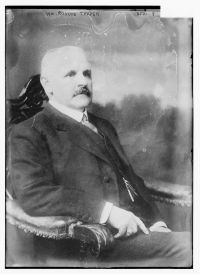 William Roscoe Thayer,
Throne-Makers
William Roscoe Thayer,
Throne-Makers
“ In such a crisis, two facts are prominent: the unusual range of activity offered to the individual—may he not traverse the whole scale of experience?—and the dependence of the individual upon himself. ”
 Ralph Waldo Trine,
The Higher Powers of Mind and Spirit
Ralph Waldo Trine,
The Higher Powers of Mind and Spirit
“ It is through obedience to this life of the spirit that order is brought out of chaos in the life of the individual and in the life of the community, in the business world, the labour world, and in our great world relations. ”
 Edward Payson Roe,
A Knight of the Nineteenth Century
Edward Payson Roe,
A Knight of the Nineteenth Century
“ By the consequences I do not mean what the world will think of you, but, rather, the personal results of your action—what you must suffer while you are in the world, and what you must suffer when far beyond the world. ”
 Emily Davies,
The Higher Education of Women
(1866)
Emily Davies,
The Higher Education of Women
(1866)
“ May we not welcome, as at least a step in the right direction, a change in our conventional habits, which may extend, though in ever so small a degree, the region of common thoughts and aims, common hopes and disappointments, common joys and common sorrows? ”
 Edward L. Pierce,
The Freedmen at Port Royal
(1863)
Edward L. Pierce,
The Freedmen at Port Royal
(1863)
“ Let those who would study well this social question, or who in public trusts are charged with its solution, be most careful here. Every motive in the minds of these people, whether of instinct, desire, or duty, must be addressed. ”
G. Lowes Dickinson, The Meaning of Good—A Dialogue
“ Let us look then at life just as it is. Here we find ourselves involved with one another in the most complex relations—economic, political, social, domestic, and the rest; and about and in these relations centres the interest of our life, whether it be pleasurable or painful, empty or full, or whatever its character. ”
Popular Science Monthly (1881)
“ These non-progressive purposes in which mental power is consumed may be classified as maintenance and conflict. By maintenance, I mean not only the support of existence, but the keeping up of the social condition and the holding of advances already gained. ”
 William Morris,
News from Nowhere — Chapter XIV: HOW MATTERS ARE MANAGED
(1890)
William Morris,
News from Nowhere — Chapter XIV: HOW MATTERS ARE MANAGED
(1890)
“ Come, tell me that!""Well," said I, "I suppose there would be a difference according to circumstances in people's action about these matters.""I should think so, indeed," said he. "At all events, experience shows that it is so. Amongst us, our differences concern matters of business, and passing events as to them, and could not divide men permanently. ”
 Charles Kingsley,
All Saints' Day and Other Sermons
Charles Kingsley,
All Saints' Day and Other Sermons
“ Again; we hear the complaint that not only men, but circumstances change. Why knit myself, people will ask, to one who to-morrow may be whirled away from me by some eddy of circumstances, and so go on his way, while I see him no more? ”
Various, The Atlantic Monthly, Volume 13…
“ What stillness and depth of manner are communicated to all who sound the deeps of life! what a refuge is their society from wit, zeal, and gossip, from petty estimates and demands! To these, now first encountered, we have been always known ”
 Charles Wagner,
The Simple Life
Charles Wagner,
The Simple Life
“ WHEN one passes in review the individual causes that disturb and complicate our social life, by whatever names they are designated, and their list would be long, they all lead back to one general cause, which is this: the confusion of the secondary with the essential. Material comfort, education, liberty, the whole of civilization—these things constitute the frame of the picture ”
 Guy Boothby,
The Red Rat's Daughter
Guy Boothby,
The Red Rat's Daughter
“ I do not mean the actions which, in the broad light of day, lie in the ordinary routine of life, but those more important circumstances which are not seen, but make up, and help to weave the skein of each man's destiny. ”
 William Wordsworth,
The Excursion
(1814)
William Wordsworth,
The Excursion
(1814)
“ Duty exists;—immutably survive, For our support, the measures and the forms, Which an abstract Intelligence supplies; Whose kingdom is, where Time and Space are not: Of other converse, which mind, soul, and heart, Do, with united urgency, require, What more, that may not perish? ”
Cecil B. Hartley, The Gentlemen's Book of Etiquette and Manual of Politeness
“ Watch each of your actions, when in society, that all the habits which you contract there may be useful and good ones. Like flakes of snow that fall unperceived upon the earth, the seemingly unimportant events of life succeed one another. ”
Ralph Waldo Trine,
In Tune with the Infinite; or, Fullness of Peace…
“ Each is right from his own particular point of view, and this point of view is the determining factor in the life of each. It determines as to whether it is a life of power or of impotence, of peace or of pain, of success or of failure. ”
Richard Roberts, The Unfinished Programme of Democracy
“ For our impulses, whether they make for life or death are the same impulses—the difference in their result springing from a difference in their direction, and in the conditions under which they operate. ”
 Joseph Sheridan Le Fanu,
Checkmate
Joseph Sheridan Le Fanu,
Checkmate
“ And if we are in another place to last like those unfailing lights—to become happy or wretched, and, in either state, indestructible for ever—what signify the labour and troubles of life, compared with that by which our everlasting fate is fixed? ”
Various, Blackwood's Edinburgh Magazine…
“ Habit, early training, easy circumstances, absence of temptation, a fortunate marriage, or the like, are the real circumstances which retain the great body of the human race of every rank in the right path. ”
John Alfred Gray, At the Court of the Amîr: A Narrative
“ We have only to compare the condition of the country and the “bent” of the people at the present time with their condition a few years ago, to bring out, in a very clear light, the civilizing effect of a far-seeing, strong man’s personality. ”
Baron John Emerich Edward Dalberg Acton Acton, A Lecture on the Study of History
“ The process by which principles are discovered and appropriated is other than that by which, in practice, they are applied; and our most sacred and disinterested convictions ought to take shape in the tranquil regions of the air, above the tumult and the tempest of active life. ”
“ Speech and silence, wisdom and folly, truth and falsehood, friendship and enmity, wealth and poverty, industry and idleness, youth and age, moderation and excess, are all pressed into the service; even the divers occupations of life have their varying lessons, and to these we now give attention. ”
 Carl Schurz,
Speeches, correspondence and political papers of Carl Schurz
(1913)
Carl Schurz,
Speeches, correspondence and political papers of Carl Schurz
(1913)
“ Standing by you with full confidence in the integrity and earnestness of your purpose and with warm personal attachment, I could not well be silent at a crisis the result of which may seriously affect your success and even more. ”
by James Allen, The Path to Prosperity — The Way Out of Undesirable Conditions
“ You say you are chained by circumstances; you cry out for better opportunities, for a wider scope, for improved physical conditions, and perhaps you inwardly curse the fate that binds you hand and foot. ”
 W. B. Yeats,
The Cutting of an Agate
W. B. Yeats,
The Cutting of an Agate
“ Society, fate, ‘tendency,’ something not quite human, begins to arrange the characters and to excite into action only so much of [Pg 72] their humanity as they find it necessary to show to one another. ”
 Adam Smith,
The Theory of Moral Sentiments
(1759)
Adam Smith,
The Theory of Moral Sentiments
(1759)
“ By Nature the events which immediately affect that little department in which we ourselves have some little management and direction, which immediately affect ourselves, our friends, our country, are the events which interest us the most, and which chiefly excite our desires and aversions, our hopes and fears, our joys and sorrows. ”
 Francis Xavier Lasance,
The young man's guide
(1910)
Francis Xavier Lasance,
The young man's guide
(1910)
“ The important influence which this power of endurance or self-control will have upon your later life, you can not as yet fully estimate, though you may perhaps have some idea of it. Important, indeed, will its influence prove in the family circle, in your intercourse with your neighbors, in the community, in business, and in public life when you are called upon to take an active share in political affairs. ”
Elma Graves, The American Journal of Sociology (1901)
“ The struggle, not indeed for existence, but for comfort, superior position, distinction, is sufficient to maintain the vigor of the society, though it does not require the suppression of sympathy and generosity. ”
M. Allen, Essay on the Classification of the Insane
“ It is astonishing how much the increased flow of the spirits will be dark, gloomy, and vindictive; or light, cheerful, and full of kindliness; just as we by our treatment excite and keep alive one part of the mind or another. The same principle might be illustrated also, on a larger scale, by surveying the conduct of different parties and governments in the world; and on a smaller scale we see every one in authority, a magistrate, a gentleman, a minister, p. ”
 Rabindranath Tagore,
Broken Ties and other Stories
(1925)
Rabindranath Tagore,
Broken Ties and other Stories
(1925)
“ What will people think?—What will happen in the future?—and so on, and so forth.’ ‘And what about the vital considerations?’ ‘What do you call vital?’ I asked in my turn. ”
James White, The Eighteen Christian Centuries
“ If we could throw ourselves with the reality of circumstance as well as the vividness of feeling into the period in which she moved and governed, we should come to truer decisions on the points submitted to our view. ”
