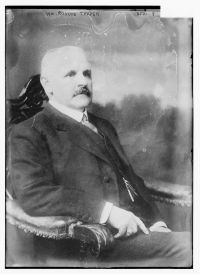
William Roscoe Thayer

William Roscoe Thayer

Summary

Portrait of William Roscoe Thayer William Roscoe Thayer Throne-Makers

He lived in exile at Turin, a forlorn old man, forlorn but inflexible, amid the memories of exploits which once had amazed the world. There he died on March 20, 1894, having survived all his contemporaries, friends and foes alike, who had beheld the rise and splendor and eclipse of his astonishing career. To be the mouthpiece of a haughty and valiant people at one of the heroic crises of their history was his mission. His genius, his defects, mirror the genius and defects of his countrymen; his glory, being a part of the glory of a whole race, is secure.
Source: Gutenberg

Portrait of William Roscoe Thayer William Roscoe Thayer Throne-Makers

When quiet came again, Kossuth had recovered strength to say that his request should not be taken as a demand for a vote of confidence. “We ask your vote for the preservation of the country; and, sirs, if any breast sighs for freedom, if any desire waits for fulfilment, let that breast suffer a little longer, let it have patience until we have saved the fatherland. You have all risen to a man, and I bow before the great-heartedness of the nation, while I ask one thing more: let your energy equal your patriotism, and the gates of hell itself shall not prevail against Hungary!”
Source: Gutenberg

Portrait of William Roscoe Thayer William Roscoe Thayer Throne-Makers

Paris, France, seemed to exist merely to be the monument of one man. And wherever the young Frenchman traveled—in Spain, in Italy, along the Rhine or the Danube, to Vienna, or Cairo, or Moscow—he saw the footprints of French valor and French audacity, reminders that Napoleon had made France the mistress of Europe. No Frenchman, were he Bourbon or Republican, but felt proud to think that his countrymen had humbled Prussia and Austria.
Source: Gutenberg

Get perspective with Kwize: daily news enlightened by great literature