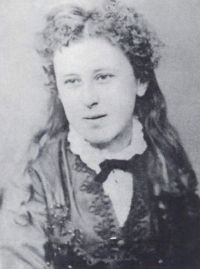
Jacopo Tintoretto

Definition and stakes

Frank Jewett Mather,  A history of Italian painting (1923)

“ Such is Jacopo Tintoretto amid the reflective tranquility, and confident splendors of Venetian painting—a wind of the spirit, a shattering, yet consoling, apparition. Tenderness, tragedy, 425romance, are his realm. Where his contemporaries dealt in superb averages, he deals in transcendent exceptions. Thus he has ever been a baffling figure to the critics. For the febrile Ruskin, he is among the greatest of painters; for the coolly analytical Kenyon Cox, he is little better than a reckless sensationalist. Every one, friend or foe of his art, must admit its Shakespearean richness and variety. ”
Source: Gutenberg

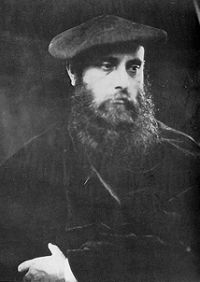
Portrait of William Michael Rossetti William Michael Rossetti,  1911 Encyclopædia Britannica, Volume 26… (1911)

“ TINTORETTO, JACOPO ROBUSTI (1518–1594) , one of the greatest painters of the Venetian school, was born in Venice in 1518, though most accounts say in 1512. His father, Battista Robusti, was a dyer, or “tintore”; hence the son got the nickname of “Tintoretto,” little dyer, or dyer’s boy, which is Englished as Tintoret. In childhood jacopo, a born painter, began daubing on the dyer’s walls; his father, noticing his bent, took him round, still in boyhood, to the studio of Titian, to see how far he could be trained as an artist. ”
Source: Wikisource

Giorgio Vasari,  Lives of the most Eminent Painters Sculptors and Architects…

“ In the same city of Venice and about the same time there lived, as he still does, a painter called Jacopo Tintoretto, who has delighted in all the arts, and particularly in playing various musical instruments, besides being agreeable in his every action, but in the matter of painting swift, resolute, fantastic, and extravagant, and the most extraordinary brain that the art of painting has ever produced, as may be seen from all his works and from the fantastic compositions of his scenes, executed [Pg 102] by him in a fashion of his own and contrary to the use of other painters. ”
Source: Gutenberg

Get perspective with Kwize: daily news enlightened by great literature