“ Looking at Tintoretto's work and remembering that he hardly stirred beyond the limits of the Republic, it is impossible not to reflect upon the chance and luck that beset the lives of men. Tintoretto, with his splendid gifts, his rapid accomplishment, his courteous manner, remains in Venice; his fame suffering because he could see far beyond the limits that beset the view of his great and popular master. ”
Tintoretto
Definition and stakes
Jacopo Tintoretto, a leading figure of the Venetian school, is renowned for his dynamic compositions, command of color, and ability to blend dramatic intensity with technical accuracy. Scholars such as S. L. Bensusan comment on his limited geographical reach and unrealized potential, while Amy Steedman focuses on his family legacy, describing how his daughter Marietta reflected his artistic brilliance. Sir Claude Phillips contrasts Tintoretto’s rich symbolism with Titian’s calm nobility, and Henry James emphasizes his unique capacity to portray both deep shadow and brilliant illumination.
John Addington Symonds highlights Tintoretto’s dependence on poetic vision, while E. V. Lucas stresses his tireless dedication and conviction that drawing forms the core of artistic practice. These viewpoints together portray Tintoretto as a contradictory figure—anchored in Venetian tradition yet surpassing it through boldness, meticulous craftsmanship, and an unquenchable drive for expressive originality.
Quotes about “Tintoretto”
Amy Steedman, Knights of Art: Stories of the Italian Painters
“ At the time when Tintoretto was painting his 'Paradiso,' his little daughter Marietta had grown to be a woman, and her painting too had become famous. She was invited to the courts of Germany and Spain to paint the portraits of the King and Emperor, but she refused to leave Venice and her beloved father. Even when she married Mario, the jeweller, she did not go far from home, and Tintoretto grew every year fonder and prouder of his clever and beautiful daughter. Not only could she paint, but she played and sang most wonderfully, and became a great favourite among the music-loving Venetians. ”
Sir Claude Phillips, The Later Works of Titian
“ The thoughts of all who are familiar with Venetian art will involuntarily turn to Tintoretto's rendering of the same moving, yet in its symbolical character not naturally ultra-dramatic, scene. The younger master lends to it a significance so vast that he may be said to go as far beyond and above the requirements of the theme as Titian, with all his legitimate splendour and serene dignity, remains below it. With Tintoretto as interpreter we are made to see the beautiful episode as an event of the most tremendous import—one that must shake the earth to its centre. ”
Related terms
Authors who wrote about “Tintoretto”
S. L. BensusanEvelyn March Phillipps E. V. Lucas
 Bernard BerensonSir Claude Phillips
 John Addington SymondsAmy SteedmanDorothy MenpesFrank Jewett MatherGiorgio VasariClara Erskine Clement Waters
 Henry Fuseli
 Alice MeynellMary Schell Hoke BaconHenry James
 Walter M. GallichanEdward Hutton
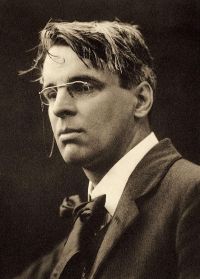 W. B. YeatsSarah Tytler
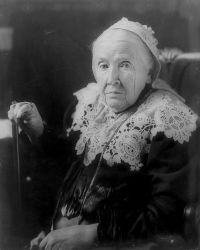 Julia Ward Howe
E. V. LucasBernard BerensonSir Claude PhillipsJohn Addington SymondsAmy SteedmanDorothy MenpesFrank Jewett MatherGiorgio VasariClara Erskine Clement WatersHenry FuseliAlice MeynellMary Schell Hoke BaconHenry JamesWalter M. GallichanEdward HuttonW. B. YeatsSarah TytlerJulia Ward Howe