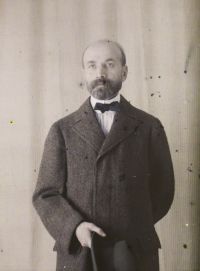
Bernard Berenson

Biographical details

Portrait of Bernard Berenson Bernard Berenson,  The Venetian Painters of the Renaissance

“ Donatello's bust of Niccolò d'Uzzano shows clearly, nevertheless, that the Renaissance could not long remain satisfied with the sculptured portrait. It is coloured like nature, and succeeds so well in producing for an instant the effect of actual life as to seem uncanny the next moment. Donatello's contemporaries must have had the same impression, for busts of this kind are but few. Yet these few prove that the element of colour had to be included before the satisfactory portrait was found: in other words, that painting and not sculpture was to be the portrait-art of the Renaissance. ”
Source: Gutenberg

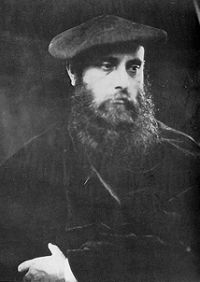
Portrait of Bernard Berenson Bernard Berenson,  The Florentine Painters of the Renaissance

“ If attractiveness, and attractiveness of the best kind, sufficed to make a great artist, then Filippo would be one of the greatest, greater perhaps than any other Florentine before Leonardo. Where shall we find faces more winsome, more appealing, than in certain of his Madonnas—the one in the Uffizi, for instance—more momentarily evocative of noble feeling than in his Louvre altar-piece? Where in Florentine painting is there anything more fascinating than the playfulness of his children, more poetic than one or two of his landscapes, more charming than is at times his colour? ”
Source: Gutenberg

Portrait of Bernard Berenson Bernard Berenson,  The Venetian Painters of the Renaissance

“ At first the new priesthood was confined almost entirely to writers, but in little more than a generation architects and sculptors began to have their part. The passion for building is in itself one of the most instinctive, and a man's name and armorial bearings, tastefully but prominently displayed upon a church or palace, were as likely, it was felt, to hand him down to posterity as the praise of poets or historians. It was the passion for glory, in reality, rather than any love of beauty, that gave the first impulse to the patronage of the arts in the Renaissance. ”
Source: Gutenberg

Get perspective with Kwize: daily news enlightened by great literature