Summary

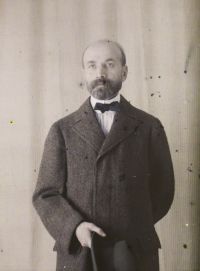
Portrait of Bernard Berenson Bernard Berenson The Florentine Painters of the Renaissance

If attractiveness, and attractiveness of the best kind, sufficed to make a great artist, then Filippo would be one of the greatest, greater perhaps than any other Florentine before Leonardo. Where shall we find faces more winsome, more appealing, than in certain of his Madonnas—the one in the Uffizi, for instance—more momentarily evocative of noble feeling than in his Louvre altar-piece? Where in Florentine painting is there anything more fascinating than the playfulness of his children, more poetic than one or two of his landscapes, more charming than is at times his colour?
Source: Gutenberg

Portrait of Bernard Berenson Bernard Berenson The Florentine Painters of the Renaissance

FRA BARTOLOMMEO Before approaching the one man of genius left in Florence after Botticelli and Leonardo, before speaking of Michelangelo, the man in whom all that was most peculiar and much that was greatest in the striving of Florentine art found its fulfilment, let us turn for a moment to a few painters who, just because they were men of manifold talent, might elsewhere almost have become masters. Fra Bartolommeo, Andrea del Sarto, Pontormo, and Bronzino were perhaps no less gifted as artists than Palma, Bonifazio Veronese, Lotto, and Tintoretto
Source: Gutenberg

Portrait of Bernard Berenson Bernard Berenson The Florentine Painters of the Renaissance

We are now able to understand why every art whose chief preoccupation is the human figure must have the nude for its chief interest; why, also, the nude is the most absorbing problem of classic art at all times. Not only is it the best vehicle for all that in art which is directly life-confirming and life-enhancing, but it is itself the most significant object in the human world. The first person since the great days of Greek sculpture to comprehend fully the identity of the nude with great figure art, was Michelangelo.
Source: Gutenberg

Get perspective with Kwize: daily news enlightened by great literature