Summary

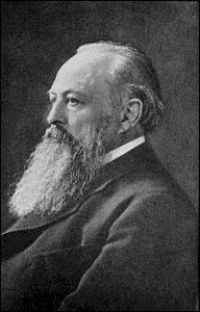
Portrait of John Acton John Acton Historical Essays and Studies (1907)

I believe that in principle every sentence of death — no matter whether applied by an individual or by society — is a crime, and if it were in my power I should deem it my duty to abolish it. . . . The abolition of capital punishment is an absolute duty in a free country. . . . But so long as war for the deliverance of one's country shall be a holy thing, or the armed protection of the weak against the powerful tyrant that tramples on him, or the defence by every means of the brother against whom the assassin's knife is raised, the absolute inviolability of life is a lie.
Source: Wikisource

Portrait of John Acton John Acton Historical Essays and Studies (1907)

To the cogency of the unwritten law, to the stern power of the disinterested idea for which men died with a passion of sacred joy in the land of the almighty dollar and the cotton-king, justice is not done. That which made the conflict terrible, and involved Europe in its complications, was not the work of premeditating slave-owners, but of men to whom State rights, not slavery, were supreme, who would have given freedom to the slaves in order, by emancipation, to secure independence.
Source: Wikisource

Portrait of John Acton John Acton Historical Essays and Studies (1907)

When the soul is just liberated from the wretched giant's bed of dogmas on which it has been racked and stretched ever since it began to think, there is a feeling of exultation and strong hope. We think we shall run well when we have the full use of our limbs and the bracing air of independence, and we believe that we shall soon obtain something positive which will not only more than compensate us for what we have renounced, but will be so well worth offering to others that we may venture to proselytise as fast as our zeal for truth may prompt us.
Source: Wikisource

Get perspective with Kwize: daily news enlightened by great literature