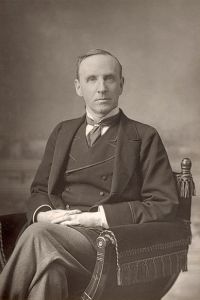
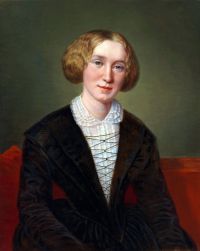
“ George Eliot combining in an unusual degree the subtlest power of analysis with that happy gift of genius which enabled her to create such characters as Amos Barton, Hetty, Mrs. Poyser, Maggie, and Tom Tulliver, Godfrey Cass and Caleb Garth, which seem to come fresh from the mould of Nature itself. Indeed, she has hardly a rival among women in this power of objective imagination by which she throws her whole soul into natures of the most varied and opposite types, whereas George Sand only succeeds greatly when she is thoroughly in sympathy with her creations. ”
George Eliot
Definition and stakes
George Eliot, the pen name of Mary Ann Evans (1819–1880), was a leading Victorian novelist celebrated for her psychological insight, realism, and detailed depiction of provincial life. Her works, including Middlemarch and The Mill on the Floss, combine social commentary with philosophical exploration, examining human complexity through carefully constructed characters. Critics like Mathilde Blind admired her ability to create figures that feel "fresh from the mould of Nature," distinguishing her from George Sand’s emotional intensity.
John Morley emphasized her "deep philosophic thought" and engagement with real-life energy, while Justin McCarthy observed her incorporation of Comtean and Darwinian ideas. Henry James called her "illustratively great," underscoring her lasting intellectual and artistic impact. Her legacy lies in merging thorough analysis with compassionate storytelling, influencing the moral and psychological breadth of the modern novel.
Quotes about “George Eliot”
 Mathilde Blind,
George Eliot
(1883)
Mathilde Blind,
George Eliot
(1883)
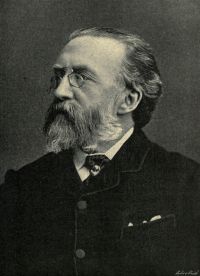
“ George Sand is impassioned, turbulent, revolutionary, the spiritual daughter of Rousseau, with an enthusiastic faith in man's future destiny. George Eliot, contemplative, observant, instinctively conservative, her imagination dearly loving to do "a little Toryism on the sly," is as yet the sole outcome of the modern positive spirit in imaginative literature—the sole novelist who has incorporated in an artistic form some of the leading ideas of Comte, of Mazzini, and of Darwin. ”
 Justin McCarthy,
Modern Leaders: Being a Series of Biographical Sketches
Justin McCarthy,
Modern Leaders: Being a Series of Biographical Sketches
“ The deep philosophic thought of George Eliot's novels suffuses and illumines them everywhere. You can point to no sermon here, no lecture there, no solid mass interposing between this incident and that, no ponderous moral hung around the neck of this or that personage. Only you feel that you are under the control of one who is not merely a great story-teller but who is also a deep thinker.It is not, perhaps, unnecessary to say to American readers that George Eliot is the only novelist who can paint such English people as the Poysers and the Tullivers just as they really are. ”