Experiment, a cornerstone of scientific inquiry, denotes systematic procedures designed to test hypotheses or observe phenomena under controlled conditions. From Francis Bacon’s advocacy for empirical methods to Richard Glazebrook’s focus on isolating variables, authors have long framed experimentation as both a tool and a philosophy.
Whether in Oliver Goldsmith’s critique of speculative over empirical reasoning or Arabella B. Buckley’s celebration of cumulative discovery, the theme underscores experiment’s role in bridging observation and theory. As Boyd Henry Bode notes, experimentation is not merely a scientific practice but the very essence of progressive knowledge.
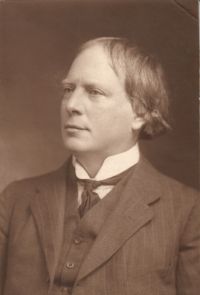 Arthur Machen,
The House of Souls
(1906)
Arthur Machen,
The House of Souls
(1906)