Summary

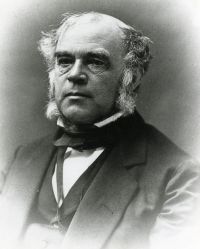
Portrait of John William Draper John William Draper History of the Conflict Between Religion and Science… (1874)

It is remarkable how quickly the ferocious fanaticism of the Saracens was transformed into a passion for intellectual pursuits. At first the Koran was an obstacle to literature and science. Mohammed had extolled it as the grandest of all compositions, and had adduced its unapproachable excellence as a proof of his divine mission. But, in little more than twenty years after his death, the experience that had been acquired in Syria, Persia, Asia Minor, Egypt, had produced a striking effect, and Ali the khalif reigning at that time, avowedly encouraged all kinds of literary pursuits.
Source: Wikisource

Portrait of John William Draper John William Draper History of the Conflict Between Religion and Science… (1874)

The Abasside dynasty in Asia, the Fatimite in Egypt, and the Ommiade in Spain, became rivals not merely in politics, but also in letters and science.
In letters the Saracens embraced every topic that can amuse or edify the mind. In later times, it was their boast that they had produced more poets than all other nations combined. In science their great merit consists in this, that they cultivated it after the manner of the Alexandrian Greeks, not after the manner of the European Greeks. They perceived that it can never be advanced by mere speculation
Source: Wikisource

Portrait of John William Draper John William Draper History of the Conflict Between Religion and Science… (1874)

When Amrou, the lieutenant of the Khalif Omar, conquered Egypt, and annexed it to the Saracenic Empire, he found in Alexandria a Greek grammarian, John surnamed Philoponus, or the Labor-lover. Presuming on the friendship which had arisen between them, the Greek solicited as a gift the remnant of the great library—a remnant which war and time and bigotry had spared. Amrou, therefore, sent to the khalif to ascertain his pleasure. “If,” replied the khalif, “the books agree with the Koran, the Word of God, they are useless, and need not be preserved; if they disagree with it, they are pernicious.
Source: Wikisource

Get perspective with Kwize: daily news enlightened by great literature