Summary

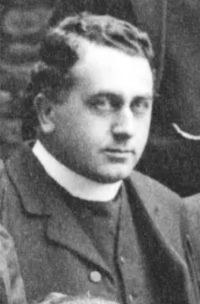
Portrait of De Lacy O'Leary De Lacy O'Leary Arabic Thought and Its Place in History… (1922)

But this culture came as a living thing with an unbroken and continuous development from what we call the "classic" age. As the philosophy of the great classic schools passes down to these later periods it shows great modifications, but this alteration is itself a proof of life. Philosophy, like religion, in so far as it has a real vitality, must change and adapt itself to altered conditions and new requirements: it can remain pure and true to its past only in so far as its life is artificial and unreal, lived in an academic atmosphere far removed from the life of the community at large.
Source: Wikisource

Portrait of De Lacy O'Leary De Lacy O'Leary Arabic Thought and Its Place in History… (1922)

The current philosophy had changed from the older standards, not because the degenerate people of those days could not understand the pure doctrines of Plato and Aristotle, but because they took philosophy so seriously and earnestly as an explanation of the universe and of man's place in it that they were bound to re-adjust their views in the light of what they regarded as later information, and the views had altered to adjust themselves with the course of human experience.
Source: Wikisource

Portrait of De Lacy O'Leary De Lacy O'Leary Arabic Thought and Its Place in History… (1922)

So it is inevitable that as a religion or a philosophy lives and really fulfils its proper functions it has to pass through many changes. Of course the same holds good for all other forms of culture: it may be true that a country is happy if it has no history, but it is the placid happiness of vegetable life, not the enjoyment of the higher functions of rational being.
In considering the transmission of Greek philosophy to the Arabs we see that philosophy still as a living force, adapting itself to changed conditions but without a break in the continuity of its life.
Source: Wikisource

Get perspective with Kwize: daily news enlightened by great literature