Summary

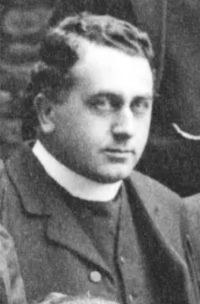
Portrait of De Lacy O'Leary De Lacy O'Leary Arabic Thought and Its Place in History… (1922)

The object in view of the Arabic students of alchemy does not appeal to the modern scientist, although the possibility of transmuting elements is no longer regarded as the impossible dream which it appeared to the chemists of the nineteenth century: and, at the same time, it is perfectly clear that with admitted limitations, the Arabic chemists were bona fide investigators, though not understanding correctly the results of the experiments they made.
Source: Wikisource

Portrait of De Lacy O'Leary De Lacy O'Leary Arabic Thought and Its Place in History… (1922)

Although conforming to Islam, Ibn al-Muqaffa' was generally regarded as a Zindiq, a term properly signifying a Manichæan but used loosely by the Arabic writers to denote a member of one of the Persian religions who professed outward conformity to Islam, but secretly adhered to his own creed, or as a term of abuse to denote a heretic of any sort.
Source: Wikisource

Portrait of De Lacy O'Leary De Lacy O'Leary Arabic Thought and Its Place in History… (1922)

The father of Arabic medicine proper was Abu Bakr Muhammad b. Zakariyya ar-Razi (d. A.H. 311–320 =A.D. 923–932) who was known to Latin mediaeval writers as "Razes," a student of music, philosophy, literature, and finally medicine. In his medical pandects he uses both Greek and Indian authorities, and the introduction of these latter in subordination to the classic authorities used at Alexandria was the really important contribution made by the Arabic students to the progress of science.
Source: Wikisource

Get perspective with Kwize: daily news enlightened by great literature