Summary

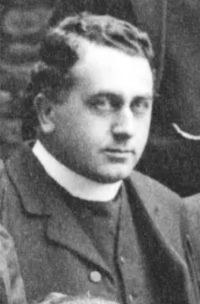
Portrait of De Lacy O'Leary De Lacy O'Leary Arabic Thought and Its Place in History… (1922)

Thomas Aquinas must be regarded as the prince of the Latin scholastics, for it is he who first draws freely upon metaphysics and psychology and co-ordinates them with theology—the psychological analysis given in the Secunda secundae of the Summa is one of the best products of the Latin scholastics—and also he was the first to appreciate correctly the difficulties of translation and insist on an accurate rendering as essential to an understanding of Aristotle.
Source: Wikisource

Portrait of De Lacy O'Leary De Lacy O'Leary Arabic Thought and Its Place in History… (1922)

In 1240 William published censures against certain opinions, which he states to be derived from the Arabic philosophers; amongst these he expresses his disapproval of the doctrine of the First Intelligence, an emanation from God, as being the agent of creation, a doctrine common to all the philosophers, but which he attributes specifically to al-Ghazali; he objects also to the teaching that the world is eternal, which he attributes correctly to Aristotle and Ibn Sina, but mentions Averroes as an orthodox defender of the truth
Source: Wikisource

Portrait of De Lacy O'Leary De Lacy O'Leary Arabic Thought and Its Place in History… (1922)

When the friars began to take their place in the work of the universities we note two striking changes: (i.) the friars cut loose entirely from the timid policy of conservatism and begin to make free use of all the works of Aristotle and of the Arabic commentators, and also make efforts to procure newer and more correct translations of the Aristotelian text from the original Greek; under this leadership the universities gradually became more modern and enterprising in their scientific work, though not without evidence of strong opposition in certain quarters.
Source: Wikisource

Get perspective with Kwize: daily news enlightened by great literature