Ernest Renan

Definition and stakes

1911 Encyclopædia Britannica (1911)

“ Renan was now a candidate for the chair of Hebrew and Chaldaic languages at the College de France, which he had desired since first he studied Hebrew at the seminary of St Sulpice. The death of the scholar Quatremere had left this post vacant in 1857. No one in France save Renan was capable of filling it. The Catholic party, upheld by the empress, would not appoint, an unfrocked seminarist, a notorious heretic, to a chair of Biblical exegesis. Yet the emperor wished to conciliate Ernest Renan. He offered to send the young scholar on an archaeological mission to Phoenicia. ”
Source: Wikisource

Portrait of Ernest Renan Ernest Renan,  Recollections of My Youth

“ None of the young men in the village would have dreamt of taking a liberty with her, so much was her father respected. The feeling of her superiority prevented her from forming any acquaintance with the young peasants, and they never thought of paying their addresses to her. The poor girl lived, therefore, in a state of absolute solitude, for the only other inhabitant of the house was a lad of twelve or thirteen, a nephew, whom Kermelle had taken under his care and to whom the priest, a good man if ever there was one, taught what little Latin he knew himself. ”
Source: Gutenberg

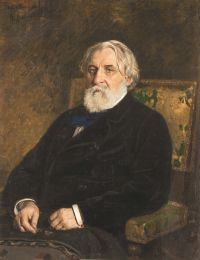
Portrait of Ivan Turgenev Ivan Turgenev,  Rudin (1900)

“ In his funeral oration the spokesman of the most artistic and critical of European nations, Ernest Renan, hailed him as one of the greatest writers of our times: ‘The Master, whose exquisite works have charmed our century, stands more than any other man as the incarnation of a whole race,’ because ‘a whole world lived in him and spoke through his mouth.’ Not the Russian world only, we may add, but the whole Slavonic world, to which it was ‘an honour to have been expressed by so great a Master.’
This recognition was, however, of slow growth.
”
Source: Wikisource

Get perspective with Kwize: daily news enlightened by great literature