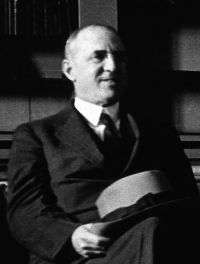
Al-Farabi

Definition and stakes

F. F. Arbuthnot Arabic Authors

Abu Nasr Al-Farabi (Alfarabius) , called by the Arabs a second Aristotle, is generally considered to be the second Arab philosopher; Avicenna, who always quotes him in his works, the third; the first place being assigned to Al-Kindi. Al-Farabi studied Arabic (he was a Turk by birth) and philosophy in Baghdad, where he attended the lectures of Abu Bishr Matta bin Yunus, who possessed, and also imparted to his pupils, the gift of expressing the deepest meanings in the easiest words.
Source: Gutenberg

Portrait of De Lacy O'Leary De Lacy O'Leary Arabic Thought and Its Place in History… (1922)

Al-Farabi appears throughout as a devout Muslim, and evidently does not appreciate the bearing of the Aristotelian psychology on the doctrine of the Qur'an. The earlier belief of Islam, as of most religions, was a heritage from primitive animism, which regarded life as due to the presence of a perfectly substantial, though invisible, thing called the soul: a thing is alive so long as the soul is present, it dies when the soul goes away.
Source: Wikisource

Portrait of De Lacy O'Leary De Lacy O'Leary Arabic Thought and Its Place in History… (1922)

In this treatment al-Farabi is mingling the teaching of philosophy proper with mysticism, in his days rapidly developing in Asiatic Islam, and especially in the Shi'ite community with which he was in contact. From the philosophical point of view God is unknowable but necessary, just as eternity and infinity are unknowable but necessary, because God is above all knowledge: but in another sense God is beneath all knowledge, as the ultimate reality must underlie all existing things, and every result is a manifesting of the cause.
Source: Wikisource

Get perspective with Kwize: daily news enlightened by great literature