“ A mounted troop of wild Berbers from the hills, with their long, brass-bound guns slung across their backs, and gaudy handkerchiefs about their heads, will ride through the bazaars, ragged of dress and no less ragged in the harness of their horses. "Balak!" Very swiftly way is made for them. ”
Berbers
Definition and stakes
The Berbers, an indigenous people of North Africa, have long been portrayed in literature as resilient mountain dwellers and nomadic survivors of the Sahara. Authors such as R. B. Cunninghame Graham highlight their distinct physical characteristics and cultural connection to rugged landscapes, while Élisée Reclus points to their demographic significance and absence of a unified origin.
Walter Harris describes their unconventional attire and social practices, and René Caillié emphasizes their strong independence. These accounts together present the Berbers as a diverse group, shaped by geography and history, whose identity persists through contrasts with Arab and Islamic influences.
Quotes about “Berbers”
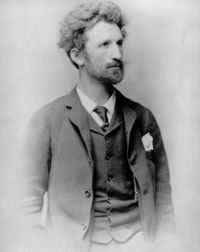
R. B. Cunninghame Graham,
Mogreb-el-Acksa: A Journey in Morocco
“ The Berbers, short, squat figures, high cheekbones, small eyes, square frames, great walkers, only becoming horsemen by necessity, as when the Arabs have forced them to the desert; as fond of mountains as the Arabs are of plains; in general agriculturists, whereas the Arab in his true sphere prefers a pastoral life; the Berbers, little known outside their mountains, look rather Scottish in appearance, that is, Scotch as ordinary mortals see that race, and not as seen through “kailyard” spectacles. ”
S. P. Scott, History of the Moorish Empire in Europe… (1904)
“ The Berbers, beholding with wonder the apparently invincible character of their enemy, equally fortunate in plain and mountain fastness, defeating with ease their bravest squadrons, and scaling, despite all obstacles, the all-but impregnable defences of their strongholds, clothed him with the attributes of divinity, and, submitting to his dominion, recognized the power of the Khalif, while at the same time, abjuring their idolatry, they confessed the unity and majesty of God. The advance of Okbah was the triumphant progress of a conqueror. ”
Various, Encyclopaedia Britannica, 11th Edition…
“ The Berbers’ weapons are those of the Arab: the long straight sword, the slightly curved and highly ornamented dagger, and the long gun. Berbers are not great town-builders. Their villages, however, are often of substantial appearance: with houses of untrimmed stones, occasionally with two storeys, built on hills, and invariably defended by a bank, a stone wall or a hedge. Sometimes their homes are mere huts of turf, or of clay tiles, with mortar made from lime and clay or cow-dung. ”
George Edward Woodberry,
North Africa and the desert
(1914)
“ Their rise has been termed, not inaptly, a renaissance of the Berber race power, as, indeed, the entire history of the Berbers was a series of explosions of national force, succeeding each other in one or another place at long intervals, but impotent to found a permanent political state. ”
Élisée Reclus,
Africa by Élisée Reclus/Volume 2
(1892)
“ At present the proportion of Berbers is estimated at about two-thirds of the whole population, and especially in the highland districts, remote from the town and seaboard, they form the almost exclusive element At the same time this general expression, Berber, applied collectively to all the inhabitants not of distinctly Semitic or Negro descent, by no means implies a community of origin. ”
Walter Harris, Tafilet (1895)
“ Berbers, whose one desire as to clothing seems to be absolute freedom of limb. The haik, or toga-like garment of the Arabs, is used amongst the better-class Berbers, but merely as a luxury. Their typical costume consists of the chamira, or long loose shirt reaching from the neck to below the knees, and the haidus [65] above, the open hooded cloak called by the Arabs s’lham. This in the case of the mountaineers takes the form of the black goat’s-hair article, and in that of the Berbers of the plains of a thick but finely woven garment of white wool. ”
Walter Harris, Tafilet (1895)
“ No doubt to a great extent the moral character of the Berbers is due to the fact that their women are allowed entire liberty, do not veil their faces, and mix on almost all occasions with the men. One of the first things that struck me on my arrival at Dads was the good-humoured and innocent chaff that passed between the men and the girls of the tribe, even in the streets of the ksar, and still more when they brought us our food to the minzah on the house-top. The women are distinctly pretty, with very fair skins and clear complexions ”
René Caillié,
Travels through Central Africa to Timbuctoo and across the Great Desert to Morocco performed in the year 1824-1828…
(1830)
“ Heartily cursing the inhumanity of their masters, I returned sorrowfully to our own camp under the date-trees. The Berbers keep a great number of dogs to watch their flocks, and they are so accustomed not to suffer the approach of any stranger whatsoever to the habitations of which they are left in charge, that the fear of being devoured by them serves as a wholesome restraint upon the depredations of those robbers by whom the country is so much infested. The Berbers themselves dare not approach without caution the camps of their own tribe to which they are strangers ”
Ignatius Donnelly,
Atlantis: The Antediluvian World
(1882)
“ We have every reason to believe the Berbers existed in the remotest times, with all their essential moral and physical peculiarities.... They existed in the time of Menes in the same condition in which they were discovered by Phœnician navigators previously to the foundation of Carthage. They are an indomitable, nomadic people, who, since the introduction of camels, have penetrated in considerable numbers into the Desert, and even as far as Nigritia. ”
1911 Encyclopædia Britannica, Volume 23… (1911)
“ They are typical Berbers in physique, tall, well made and muscular, with European features and fair skins bronzed by the sun. In morality they are singularly superior to their neighbours. In order to prevent youthful unchastity, marriages are contracted between children of eight years old, the girl being brought home to live with the lad at his parents’ home till a child is born, when a separate dwelling is provided for the youthful couple. ”
Anonymous, What We Saw in Egypt
“ The Berbers live in Lower Nubia, and are a wild, fine-looking race. The men wear but little clothing; they all carry a small dagger, which is bound with a red leather bracelet round the left arm, above the elbow. ”
Samuel George Morton,
Crania Ægyptiaca
“ The Berbers, says he, are of a dark red-brown complexion, “which, if the mother is a slave from Abyssinia, becomes a light brown in the children; and if from the Negro countries, extremely dark. Their features are not at all those of the Negro, the face being oval, the nose often perfectly Grecian, and the cheek bones not prominent. The upper lip, however, is somewhat thicker than is considered beautiful among northern 58nations, though it is still far from the Negro lip. Their hair is bushy and strong, but not woolly.” ”
R. V. C. Bodley,
Algeria from within
(1927)
“ There is, of course, also the pure Berber spoken by the people of the Kabyle and Aurès Mountains, of the Mzab and the Hoggar; and, though Berbers are often found who can not speak anything else, it is almost a general rule to find them bilinguists, while the majority talk French too. It is interesting to note that when the Sultan of Zanzibar came to North Africa the only people with whom he could speak fluently were the Berbers of the Mzab.The Jews speak both Arab and French fluently; their Arab is often purer than that of the actual natives. A great number speak Hebrew among themselves. ”
R. V. C. Bodley,
Algeria from within
(1927)
“ Roughly speaking, therefore, it can be said that the groups of pure Berbers are located in the high mountains, in the Mzab and in the Hoggar; that the Berber influence is predominant among the people who inhabit the country immediately south of Algiers, as far as the southern slopes of the Atlas, the department of Constantine, and an arm of the southern territories running from Biskra down to Ouargla and the great belt of desert running right across the Sahara from the Atlantic to Tripoli on a latitude just south of El Golea. ”
René Caillié,
Travels through Central Africa to Timbuctoo and across the Great Desert to Morocco performed in the year 1824-1828…
(1830)
“ The Moors of this miserable country are incessantly harassed by the Berbers, from whose habits of rapine they have every thing to fear, although they pay them a heavy tribute; and not one of them, whatever rank he may hold at home, dares travel without being thus accompanied. These roving people, not being themselves cultivators of the soil, are obliged frequently to go to el-Drah to purchase barley and dates for food, and not daring to attempt this without the convoy of the Berbers, they pay them an additional tribute by way of remuneration. ”
1911 Encyclopædia Britannica (1910)
“ The aborigines of the Canary Islands, the Guanches, would seem almost certainly, from the remains of their language, to have been Berbers. But the problem of the actual origin of the Berber race has not yet been solved. Perhaps the most satisfactory theory is that of Sergi, who includes the Berbers in the “Mediterranean Race.” General L. L. C. Faidherbe regards them as indigenous Libyans mingled with a fair-skinned people of European origin. ”
Joseph Deniker,
The Races of Man: An Outline of Anthropology and Ethnography
“ Under the name of Berbers are included populations varying very much in type and manners and customs, speaking either Arabic (Semitic language) or Berberese (Hamitic language) . Three-fourths of the “Arabs” of Northern Africa are only Berbers speaking Arabic, and are the more “Arabised” in regard to manners and customs as they are nearer to Asia. The nomads of the Libyan desert and Tripoli have preserved fairly well the Berber type, but they have become Arabs in language and usages. In Tunis and Algeria the Arab influence is still very much felt in the south; in Morocco it is very trifling. ”
Élisée Reclus,
Africa by Élisée Reclus/Volume 2
(1892)
“ This position of landowners has been maintained by the Berbers so exclusively that the Arabs are able to acquire possession of the trees alone; hence at times feuds and frays, requiring the intervention of the Turkish troops stationed in Fezzan. The races are doubtless so intermingled that it is difficult any longer to discriminate between the two elements in Jofra. Nevertheless, a traditional convention enables the Berbers to safeguard their primitive proprietary rights. The son, whatever the origin of his mother, is always regarded as belonging to his father's nationality. ”
John Lewis Burckhardt,
Travels in Nubia
(1819)
“ Mr. Seetzen, in a treatise on the Berber nation, inserted in the Mines de l’Orient, says that Batouta states the inhabitants of Makdosho to be Berbers. He calls them, it is true, of the nation of Barbara, but it remains to be proved whether the northern Berbers have any thing in common with these Barbaras, or with the Berábera above the cataract of Syene, whom Mr. Seetzen likewise affiliates with the Berbers of Libya. I am ignorant whether Mr. Seetzen was in possession of the great work of Batouta, or merely of the abridgment. ”
Isabel Savory,
In the Tail of the Peacock
“ The Berbers are the aborigines of Morocco, and live more [13] or less in the hills and mountains, into which they were driven by the Arabs in the seventh century, when they overran Morocco. The Arabs, on the other hand, live in the plains; and Arabs and Berbers practically halve the country between them. Both peoples divide into numerous tribes, of which the men from the Riff are a Berber tribe. The negroes in Morocco are merely slaves imported from the south. One and all the Arab and Berber tribes are called indiscriminately by Europeans "Moors." ”
R. B. Cunninghame Graham,
Mogreb-el-Acksa: A Journey in Morocco
“ Still waiting for the messenger, I fall to observing the difference between the Arabs and the Berber race. It is the fashion amongst travellers in Morocco and Algeria to exalt the Berbers, and run down the Arabs. “The noble Shillah race” has become quite a catch-word with every one who sees a Berber and writes down his impressions. Curious that no one talks of the noble “Tuareg race,” yet the Tuareg’s are Berber of the Berbers, and their language, known as Tamashek, merely a dialect of the Berber p. ”
Walter Harris, Tafilet (1895)
“ Unfortunately, long before a European could obtain a shot of his quarry, he would probably have fallen to the rifle of some native sharpshooter; for so intense is their hatred of Europeans, that a journey without disguise, or perhaps the company of some great Shereef, would be absolutely impossible. I believe, however, that [215] there are possibilities of much exploration being done amongst the Berbers if one could only get to know them personally ”
René Caillié,
Travels through Central Africa to Timbuctoo and across the Great Desert to Morocco performed in the year 1824-1828…
(1830)
“ They are industrious, and employ themselves in spinning the wool of their sheep, and weaving the yarn into blankets, which they sell at Tafilet. These Berbers have a peculiar idiom, which the Arabs do not speak; they also conform to the religion of Mahomet; they have several wives, who superintend all the household concerns, prepare the food, take care of the sheep, and have besides the laborious task of drawing water for them to drink. They pasture their flocks in the passes of the mountains wheresover they can find herbage, for the appearance of their own country is absolutely bare. ”
Isabel Savory,
In the Tail of the Peacock
“ Yet in one great point, like the Arabs, the Riffi, in common with the Berber race, lacks the power of cohesion and the spirit of patriotism, which should have welded all Berbers into one powerful people. ”
Thomas Wilhelm, A Military Dictionary and Gazetteer
“ Here the Austrians defeated the Prussians in 1744.Berbers. The general name usually given to the tribes inhabiting the mountainous regions of Barbary and the northern portions of the Great Desert. They were conquered in succession by the Phœnicians, Romans, Vandals, and Arabs. They are of middle stature, sparely but strongly built; complexion varies from a red to a yellow brown; hair is, in general, dark, and eyes dark and piercing. Their manners are austere, and in disposition they are cruel, suspicious, and implacable. They are usually at war with their neighbors or among themselves. ”
1911 Encyclopædia Britannica (1910)
“ In the Jemáa, too, the Marabout at times takes the place of honour and keeps order. The Berbers, if irreligious, are very superstitious, never leaving their homes without exorcizing evil spirits, and have a good and evil interpretation for every day of the week. Many Berbers still retain certain Christian and Jewish usages, relics of the pre-Islamitic days in North Africa, but of their primitive religion there is no trace. They are seldom good scholars, but those under French rule take all the advantage they can of the schools instituted by the government. ”
James Wood, The Nuttall Encyclopædia — B
“ Berber (8) , a town in Nubia, on the Nile, occupied by the English; starting-point of caravans for the Red Sea; railway was begun to Suakim, but abandoned.Ber`berah, the seaport of Somaliland, under Britain, with an annual fair that brings together at times as many as 30,000 people.Berbers (3,000) , a race aboriginal to Barbary and N. Africa, of a proud and unruly temper; though different from the Arab race, are of the same religion.Berbice, the eastern division of British Guiana; produces sugar, cocoa, and timber.Berbrugger, a French archæologist and philologist ”
Élisée Reclus,
Africa by Élisée Reclus/Volume 2
(1892)
“ On the other hand, those who clearly recog- nise the great contrast between the two races, might easily fall into the opposite error of regarding all the non-Arab elements as forming a single ethnical group usuall}' known by the name of Berbers. But these also present different types, and a closer inspection soon shows that many peoples of diverse origin have con- tributed to form the so-called Berber population. ”
Élisée Reclus,
The Earth and its Inhabitants
(1890)
“ These Berber peoples seem to be allied to the ancient Egyptians. The whole of North Africa and Southern Europe may have even been peopled from one ethnical source in prehistoric times, the populations, like the animal and vegetable species, thus radiating from a common centre. The oases and upland valleys in the Sahara have also been occupied by the Berbers, some of whose tribes, designated by the name of "Moors," dwell even south of the desert along the right bank of the Senegal. ”
Joseph Deniker,
The Races of Man: An Outline of Anthropology and Ethnography
“ His height is scarcely above the average (1 m. 67) , while the Arab is distinguished by his lofty stature. The Berber head is, generally speaking, not so long as the Arab, although both are dolichocephalic. The face is a regular oval in the Arab, almost quadrangular in the pure Berber. The nose is aquiline in the former, straight or concave in the latter, and moreover, the Berbers have a sort of transverse depression on the brow, above the glabella, which is not seen in the Arabs; on the other hand, they have not so prominent an occiput as the latter. ”