“ And this was the confounder of Egypt, the vicar of God—this kindly noble!"Not yet, O Prince; but its dearest mission endeth here. I come of the blood of the oppressors, but I am full of pity for thy people's wrongs. Knowest thou that the Egyptians pursue thee? Is thy hand made strong with resource? Hath the Lord God prepared thee against them?" ”
Egyptians
Definition and stakes
Egyptians, an ethnic group native to Egypt’s Nile Valley, have long been defined by their geographic and cultural connections to this fertile region, shaped by the rhythms of the Nile and the surrounding desert. Authors such as Gaston Maspero emphasized Egypt’s ancient enigmas, from its flooding cycles to its grand architectural achievements, while Edward William Lane focused on the term Masryeen, illustrating a deeply rooted identity linked to Cairo and the Nile.
Charles Rollin highlighted Egypt’s impact through its intellectual and political contributions, and H. R. Hall noted how later dynasties revisited ancient customs during periods of decline. These viewpoints together demonstrate how Egyptian identity, molded by geography and history, has persisted over millennia, merging continuity with change.
Quotes about “Egyptians”
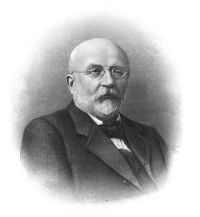 Gaston Maspero,
The Great Events by Famous Historians…
(1905)
Gaston Maspero,
The Great Events by Famous Historians…
(1905)
“ Before Menes Egypt was divided into independent kingdoms. It has always been a country of mysteries, with the mighty Nile, and its inundations, so little understood by the ancients; its trackless desert; its camels and caravans; its tombs and temples; its obelisks and pyramids, its groups of gods: Ra, Osiris, Isis, Apis, Horus, Hathor—the very names breathe suggestions of mystery, cruelty, pomp, and power. In the sciences and in the industrial arts the ancient Egyptians were highly cultivated. ”
Jean Pierre Claris de Florian, The Fables of Florian (1888)
“ The Egyptians were of all most fam'd. No people ever were more wise, More law-abiding or discreet— None more religious 'neath the skies: For that alone I think it meet That Egypt should bear off the prize. ”
 Charles Rollin,
The Ancient History of the Egyptians…
Charles Rollin,
The Ancient History of the Egyptians…
“ The Egyptians extended their reputation in a very different manner, by sending colonies into all parts of the world, and with them laws and politeness. They triumphed by the wisdom of their counsels, and the superiority of their knowledge; and this empire of the mind appeared more noble and glorious to them, than that which is achieved by arms and conquest. But, nevertheless, Egypt has given birth to illustrious conquerors, as will be observed hereafter, when we come to treat of its kings. ”
H. R. Hall, History of Egypt, Chaldea, Syria…
“ The Egyptians of the XXVIth Dynasty, wearied of the long decadence and devastating wars which had followed the glorious epoch of the conquering Pharaohs of the XVIIIth and XIXth Dynasties, turned for a new and refreshing inspiration to the works of the most ancient kings, when Egypt was a simple self-contained country, holding no intercourse with outside lands, bearing no outside burdens for the sake of pomp and glory, and knowing nothing of the decay and decadence which follows in the train of earthly power and grandeur. ”
G. Maspero, History Of Egypt, Chaldæa, Syria…
“ The Egyptians, whom we are accustomed to consider as a people respecting the established order of things, and conservative of ancient tradition, showed themselves as restless and as prone to modify or destroy the work of the past, as the most inconstant of our modern nations. ”
Anonymous, The World English Bible (WEB), Complete
“ The idols of Egypt will tremble at his presence; and the heart of Egypt will melt in its midst. 19:2 I will stir up the Egyptians against the Egyptians, and they will fight everyone against his brother, and everyone against his neighbor; city against city, and kingdom against kingdom. 19:3 The spirit of Egypt will fail in its midst. I will destroy its counsel. They will seek the idols, the charmers, those who have familiar spirits, and the wizards. 19:4 I will give over the Egyptians into the hand of a cruel lord. A fierce king will rule over them," says the Lord, Yahweh of Armies. ”
 James George Frazer,
The Golden Bough: A Study in Magic and Religion…
James George Frazer,
The Golden Bough: A Study in Magic and Religion…
“ Surrounded on every side by deserts or almost harbourless seas, the Egyptians occupied a position of great natural strength which for long ages together protected them from invasion and allowed their native habits to set and harden, undisturbed by the subversive influence of foreign conquest. The wonderful regularity of nature in Egypt also conduced to a corresponding stability in the minds of the people. ”
G. Maspero, History of Egypt, Chaldæa, Syria…
“ The Egyptians, indeed, absorbed in their civil discords, or in wars with foreign nations, soon forgot their escaped slaves, and never troubled themselves for centuries over what had become of the poor wretches, until in the reign of the Ptolemies, when they had learned from the Bible something of the people of God, they began to seek in their own annals for traces of their sojourn in Egypt and of their departure from the country. ”
Joseph Shield Nicholson, Thoth: A Romance (1888)
“ Many hundred years ago the father of the rulers of our people, a man of a Grecian tribe, held a high office in Egypt. In knowledge he surpassed all men, and in knowledge lay his authority. He devised many just laws, and was honoured and revered both by the multitude and by the king and his rulers. Had he not been thwarted, he would have made the Egyptians the most powerful people of the world. ”
H. R. Hall, History of Egypt, Chaldea, Syria…
“ This Semitic-Sumerian culture, mingling with that of the Nilotes themselves, produced the civilization of Ancient Egypt as we know it. This is a very plausible hypothesis, and has a great deal of evidence in its favour. It seems certain that in the early dynastic period two races lived in Egypt, which differed considerably in type, and also, apparently, in burial customs. The later Egyptians always buried the dead lying on their backs, extended at full length. ”
James T. Nichols, Birdseye Views of Far Lands
“ CHAPTER XVIII The Playground of Moses—EgyptNext to Palestine, Egypt is perhaps the most interesting country on the globe to visit. For great antiquity and splendor no land surpasses this cradle of civilization. The science, art and architecture of the Egyptians is the marvel of leading men even to this day. The schools of Egypt produced the greatest characters of all ages before the coming of Christ. The wisdom of this ancient race as well as some of the engineering feats command the respect of these modern days. ”
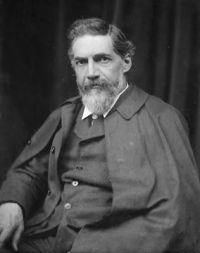 W. M. Flinders Petrie,
Ten years' digging in Egypt, 1881-1891
W. M. Flinders Petrie,
Ten years' digging in Egypt, 1881-1891
“ And shortly after came the Egyptian renascence, when the cycle of invention was run through, and the Egyptians were reduced to copying slavishly, and without the original spirit, the works of their ancestors. ”
Charles Rollin,
The Ancient History of the Egyptians…
“ I have said, that husbandmen particularly, and those who took care of flocks, were in great esteem in Egypt, some parts of it excepted, where the latter were not suffered.380 It was, indeed, to these two professions that Egypt owed its riches and plenty. It is astonishing to reflect what advantages the Egyptians, by their art and labour, drew from a country of no great extent, but whose soil was made wonderfully fruitful by the inundations of the Nile, and the laborious industry of the inhabitants. ”
Francis Llewellyn Griffith, 1911 Encyclopædia Britannica (1911)
“ Whence the population of Egypt as we trace it in prehistoric and historic times came, is not certain. The early civilization of Egypt shows remarkable coincidences with that of Babylonia, the language is of a Semitic type, the religion may well be a compound of a lower African and a higher Asiatic order of ideas. According to the evidence of the mummies, the Egyptians were of slender build, with dark hair and of Caucasian type. ”
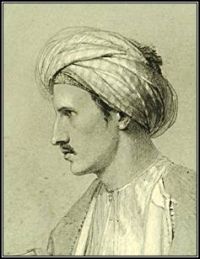 Edward William Lane,
An account of the manners and customs of the modern Egyptians
(1890)
Edward William Lane,
An account of the manners and customs of the modern Egyptians
(1890)
“ But the Egyptians pay a superstitious reverence not to imaginary beings alone: they extend it to certain individuals of their own species; and often to those who are justly the least entitled to such respect. ”
Evan Marlett Boddy, The History of Salt
“ The Egyptians, owing to the central position of their country, the knowledge they were known to possess, their unrivalled skill in irrigation, the sublimity of their architecture, the abstruse wisdom of their priests, the mysterious erudition of their astrologers, and their wonderful agricultural proficiency and renown, caused their country to be frequently visited (sometimes by stealth, owing to their stringent laws against the admission of foreigners) by Greeks, Phœnicians, Assyrians, and Chaldeans, and indeed by all who professed the study10 of science, learning, and philosophy ”
G. Maspero, History of Egypt, Chaldæa, Syria…
“ If they travelled in person to collect the riches which were offered to them by these peoples in exchange for the products of the Nile, the Egyptians could not have been the unadventurous and home-loving people we have imagined. ”
Francis Llewellyn Griffith, 1911 Encyclopædia Britannica (1911)
“ Urged on by necessity and opportunity, the Egyptians possessed sufficient enterprise and originating power to keep ahead of their neighbours in most departments of civilization, until the more warlike empires of Assyria and Persia overwhelmed them and the keener intellects of the Greeks outshone them in almost every department. The debt of civilization to Egypt as a pioneer must be considerable, above all perhaps in religious thought. ”
Edward William Lane,
An account of the manners and customs of the modern Egyptians
(1890)
“ Of Geography, the Egyptians in general, and, with very few exceptions, the best instructed among them, have scarcely any knowledge: having no good maps, they are almost wholly ignorant of the relative situations of the several great countries of Europe. ”
Edward William Lane,
An account of the manners and customs of the modern Egyptians
(1890)
“ Love of their country, and more especially of home, is another predominant characteristic of the modern Egyptians. In general, they have a great dread of quitting their native land. I have heard of several determining to visit a foreign country, for the sake of considerable advantages in prospect ”
Edward William Lane,
An account of the manners and customs of the modern Egyptians
(1890)
“ So numerous are the charms which the Egyptians employ to insure good fortune, or to prevent or remove evils of every kind, and so various are the superstitious practices to which they have recourse with these views, that a large volume would scarcely suffice to describe them in detail. ”
Tatian, Address to the Greeks (1867)
“ Of the Egyptians also there are accurate chronicles. Ptolemy, not the king, but a priest of Mendes, is the interpreter of their affairs. This writer, narrating the acts of the kings, says that the departure of the Jews from Egypt to the places whither they went occurred in the time of king Amosis, under the leadership of Moses. ”
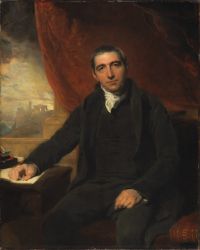 Thomas Taylor,
Iamblichus on the Mysteries of the Egyptians…
(1895)
Thomas Taylor,
Iamblichus on the Mysteries of the Egyptians…
(1895)
“ And, in short, the Egyptians resolve all things into physical, and nothing into incorporeal and living essences. Most of them likewise suspend that which is in our power from the motion of the stars; and bind all things, though I know not how, with the indissoluble bonds of necessity, which they call fate. They also connect fate with the Gods; whom, nevertheless, they worship in temples and statues, and other things, as the only dissolvers of fate. ”
Thomas Taylor,
Iamblichus on the Mysteries of the Egyptians…
(1895)
“ With the Egyptians, therefore, there is another domination of the whole elements in generation, and of the powers contained in them; four of these powers being male and four female, which they attribute to the sun. ”
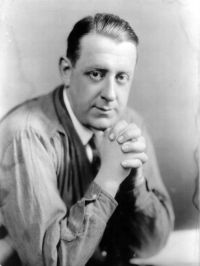 Hendrik Willem Van Loon,
The Story of Mankind
(1921)
Hendrik Willem Van Loon,
The Story of Mankind
(1921)
“ What the Egyptians, the Babylonians, the Assyrians and the Persians contributed to civilisation. This is brief and simple and may be used as a first book on the subject. "Stories of Egyptian Gods and Heroes," by F. H. Brooksbank. The beliefs of the Egyptians, the legend of Isis and Osiris, the builders of the Pyramids and the Temples, the Riddle of the Sphinx, all add to the fascination of this romantic picture of Egypt. ”
J. N. Larned, History for ready reference, Volume 1…
“ Whatever relations may be found always to exist between these great races of mankind, thus much may be regarded as certain, that the cradle of the Egyptian people must be sought in the interior of the Asiatic quarter of the world. In the earliest ages of humanity, far beyond all historical remembrance, the Egyptians, for reasons unknown to us, left the soil of their primeval home, took their way towards the setting sun, and finally crossed that bridge of nations, the Isthmus of Suez, to find a new fatherland on the favoured banks of the holy Nile. ”
W. M. Flinders Petrie,
Ten years' digging in Egypt, 1881-1891
“ That this civilization was imported by an incoming race seems most probable; and the dynastic Egyptians found already in the country an aboriginal population, whose features, whose beliefs, and whose customs, differed much from their own. ”
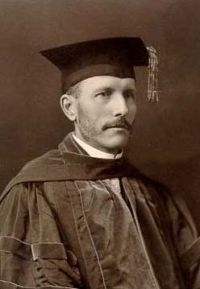 Florian Cajori,
A History of Mathematics
(1893)
Florian Cajori,
A History of Mathematics
(1893)
“ The Egyptians carried geometry no further than was absolutely necessary for their practical wants. The Greeks, on the other hand, had within them a strong speculative tendency. They felt a craving to discover the reasons for things. They found pleasure in the contemplation of ideal relations, and loved science as science. ”
Francis Llewellyn Griffith, 1911 Encyclopædia Britannica (1911)
“ According to another conception that persisted in the imagination of the Egyptians longer than any of the ideas just mentioned, the home of the dead in the heavens was a fertile region not very different forom Egypt itself, intersected by canals and abounding in corn and fruit ”
G. Maspero, History of Egypt, Chaldæa, Syria…
“ Every fellah and townsman in the service of the king, or of one of his great nobles, could leave his work and his village when he pleased, could pass from the domain in which he was born into a different one, and could traverse the country from one end to the other, as the Egyptians of to-day still do. ”
J. N. Larned, History for ready reference, Volume 1…
“ The ancients had early remarked that the cultivable land of Egypt was distinguished by its dark and almost black colour. ... The neighbouring region of the Arabian desert bore the name of Tesher, or the red land. ... The Egyptians designated themselves simply as 'the people of the black land,' and ... the inscriptions, so far as we know, have handed down to us no other appellation. ... A real enigma is proposed to us in the derivation and meaning of the curious proper name, by which the foreign peoples of Asia, each in its own dialect, were accustomed to designate Egypt. ”
Max Duncker, The History of Antiquity, Vol. 1…
“ Not only certain turns in this description, but passages in invocations which have come down to us, show that in expressing themselves, the Egyptians, in spite of the predominant vein of reflection, were not without force of imagination, or striking figures, or largeness and vigour of conception. That they are not free from bombast, foolish exaggeration, and incessant repetition, any more, or even so little, as the other nations of the East, is proved more especially by the inscriptions in the temples recording the mighty deeds of the kings. ”
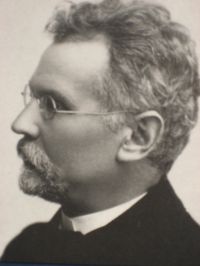 Bolesław Prus,
The Pharaoh and the Priest: An Historical Novel of Ancient Egypt
Bolesław Prus,
The Pharaoh and the Priest: An Historical Novel of Ancient Egypt
“ In the world there is only one really wise and pious people, the Egyptians; but see what is happening among us. Because of the influx of infidel foreigners, religion has fallen here also. Nobles and officials at their wine cups revile eternal life and the gods, while the people throw mud at sacred statues and make no offerings to temples.“Excess has taken the place of devotion, riot the place of wisdom. Each man wants to wear immense wigs, and anoint himself with rare perfumes; he would have tunics and aprons woven with gold, wear chains and bracelets set with jewels. ”
Edward William Lane,
An account of the manners and customs of the modern Egyptians
(1890)
“ The Egyptians are often amused by players of low and ridiculous farces, who are called “Mohabbazeen.” These frequently perform at the festivals prior to weddings and circumcisions, at the houses of the great; and sometimes attract rings of auditors and spectators in the public places in Cairo. Their performances are scarcely worthy of description: it is chiefly by vulgar jests and indecent actions, that they amuse, and obtain applause. ”
Matthew Henry, Commentary on the Whole Bible… (1700s)
“ Note, The Lord of hosts hath numberless hosts at his command. 4. The desolation of Egypt hereby is foretold, and the waste that should be made of that rich country. Egypt is now like a very fair heifer, or calf (v. 20) , fat and shining, and not accustomed to the yoke of subjection, wanton as a heifer that is well fed, and very sportful. Some think here is an allusion to Apis, the bull or calf which the Egyptians worshipped, from whom the children of Israel learned to worship the golden calf. Egypt is as fair as a goddess, and adores herself, but destruction comes ”
Bolesław Prus,
The Pharaoh and the Priest: An Historical Novel of Ancient Egypt
“ Egypt established such an army of laborers, and to them were due works renowned during ages. It seems that Egyptian priests or sages created this army and then drew out plans for it, while the kings, or pharaohs, commanded. In consequence of this the Egyptians in the days of their greatness formed as it were one person, in which the priestly order performed the rôle of mind, the pharaoh was the will, the people formed the body, and obedience gave cohesion. ”
Matthew Henry, Matthew Henry's Commentary on the Whole Bible… (1700s)
“ The Egyptians' indignation at Israel's increase, notwithstanding the many hardships they put upon them, drove them at length to the most barbarous and inhuman methods of suppressing them, by the murder of their children. ”
Related terms
Authors who wrote about “Egyptians”
Edward William LaneG. MasperoH. R. HallCharles RollinHerodotusW. M. Flinders PetrieGaston MasperoMax DunckerEvan Marlett BoddyAnonymousFrancis Llewellyn GriffithThomas TaylorBolesław PrusJ. N. LarnedMatthew HenryElizabeth MillerJames George FrazerJean Pierre Claris de FlorianJoseph Shield NicholsonJames T. Nichols