Summary

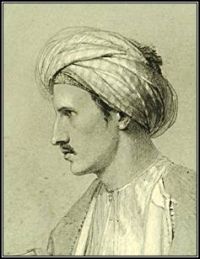
Portrait of Edward William Lane Edward William Lane An account of the manners and customs of the modern Egyptians (1890)

El-Melik ’Eesa said, ‘Pitch the tents here: we will here pass the night.’ So they pitched the tents. And the day departed with its brightness, and the night came with its darkness: but the Everlasting remaineth unchanged: the stars shone; and God, the Living, the Self-subsisting, looked upon the creation. It was the period of the full moon; and the King felt a longing to drink wine by the side of the brook and greensward: so he called to Abu-l-Kheyr, who came to him, and kissed his hand.
Source: Gutenberg

Portrait of Edward William Lane Edward William Lane An account of the manners and customs of the modern Egyptians (1890)

It is true that they do not consider it necessary, or even delicate, to consult the choice of a girl under age previously to giving her away in matrimony; but it is not less true that a man of the middle or higher classes, almost always, makes his choice of a wife from hearsay, or as a person blindfold; having no means of seeing her until the contract is made and she is brought to his house. It is impossible, therefore, that there should be any mutual attachment before marriage. Both sexes, in truth, are oppressed by tyrannical laws and customs
Source: Gutenberg

Portrait of Edward William Lane Edward William Lane An account of the manners and customs of the modern Egyptians (1890)

It is seldom that the wife of a Muslim is guilty of a criminal intrigue without being punished with death if there be four witnesses to the fact, and they or the husband prosecute her; and not always does she escape this punishment if she be detected by any of the officers of justice: in the latter case, four witnesses are not required, and often the woman, if of a respectable family, is put to death, generally in private, on the mere arbitrary authority of the government: but a bribe will sometimes save her
Source: Gutenberg

Get perspective with Kwize: daily news enlightened by great literature