Summary

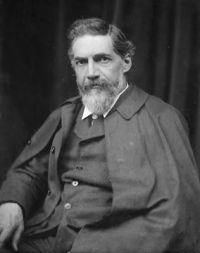
Portrait of W. M. Flinders Petrie W. M. Flinders Petrie Ten years' digging in Egypt, 1881-1891

One may be following the outside of a fortification, another trenching across it to find its thickness, another sinking a pit inside it to find the depth of the soil, another clearing a room, or trenching to find the limits of the town, or removing a rubbish deposit layer by layer. Unless just beginning work on a very featureless site, the aimless trenching or pitting is merely an excuse for a lazy mind. Far better have some theory or working hypothesis, and labour to prove it to be either right or wrong, than simply remain in expectancy.
Source: Gutenberg

Portrait of W. M. Flinders Petrie W. M. Flinders Petrie Ten years' digging in Egypt, 1881-1891

After that, we know nothing more of man until we find that the country was in its present state,—without any rainfall for practical purposes, the hills all barren desert, the Nile only filling the bottom of its old bed for a few months of the year, and meandering the rest of the time in a channel cut in its own mud, and man cultivating the old bed of the river when it is not overflowed. The civilization that we find before us in the earliest known history appears elaborate and perfect.
Source: Gutenberg

Portrait of W. M. Flinders Petrie W. M. Flinders Petrie Ten years' digging in Egypt, 1881-1891

To burden a child’s mind with such a fearful task is enough to ruin it, if not strong. It is a sad sight to see the whole of the coming intellects of a town rocking themselves to and fro while they gabble through sura after sura of the Koran in a gusty sing-song voice without pause or point; and then to reflect that this is the end and aim of nearly all their education. The native Coptic schools are the only encouraging sight of indigenous training
Source: Gutenberg

Get perspective with Kwize: daily news enlightened by great literature