Summary

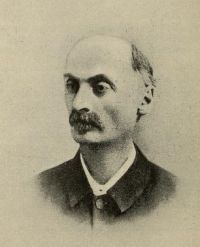
Portrait of A. H. Sayce A. H. Sayce The Egypt of the Hebrews and Herodotos

On the opposite side of the Nile, a little to the north, was the fortress of Khri-Ahu, which guarded the approach to the river. Where Cairo now stands Herodotos saw only sand and water. Even Khri-Ahu was merely an insignificant village at the foot of a fortress of mud brick; the strong walls and towers of hewn stone in which the Roman legion afterwards kept ward over Egypt were as yet unbuilt. All who could afford it lived in Memphis and its suburbs, and the rock-hewn tombs at the foot of the citadel of modern Cairo are of the Roman age.
Source: Gutenberg

Portrait of A. H. Sayce A. H. Sayce The Egypt of the Hebrews and Herodotos

Not even a solitary Bedouin disturbs the solitude of the spot at most seasons of the year. All that reminds the traveller of human life as he encamps on the edge of the sand-dunes is the electric light which flashes through the night from Port Said far away on the horizon.
In the midst of the desolate waste of poisonous mud rise the two large mounds which alone are left of Pelusium. On the larger of these, to the westward, lie the granite columns and other relics of the Roman temple, beneath which, and below the present level of the water, are the ruins of the temple of the Pharaonic age.
Source: Gutenberg

Portrait of A. H. Sayce A. H. Sayce The Egypt of the Hebrews and Herodotos

One of the most striking statues in the world is that of Khaf-Ra seated on his imperial throne, which is now in the Museum of Gizeh. The figure of the king is more than life-size; above his head the imperial hawk stretches forth its wings, and on the king's face, though the features bear the unmistakable impress of a portrait, there rests an aspect of divine calm. And yet this statue, with its living portraiture and exquisite finish, is carved out of a dioritic rock, the hardest of hard stone.
The fourth dynasty was peaceably succeeded by the fifth and the sixth.
Source: Gutenberg

Get perspective with Kwize: daily news enlightened by great literature