Canaan

Definition and stakes

Leander Ker,  Our Happy Land of Canaan (1862)

“ To injure or destroy us a nation;
They may plunder, rob and burn,
And cause our land to mourn,
But they shant have our happy land of Canaan:
Oh! no! no! no!—ha! ha! ha! ha! ha!
To them the day of Vengeance is a coming,
We will never mind the weather—no,
For let it rain, or snow,
We will die for our happy land of Canaan.
With our Johnstons and McGruders,
Of the Ship of State the rudders;
And with Beauregard to drive them to perdition,
With our Longstreets and our Lees,
We can flog them at our ease,
And will drive them from our happy land of Canaan.
And oh! ho! ho!—ha! ha! ha! ha!
”
Source: Wikisource

Matthew Henry,  Commentary on the Whole Bible… (1700s)

“ Canaan, that fruitful land, shall be turned into barrenness for the wickedness of those that dwell therein. They love the reward in the corn-floor, and are so full of the joy of harvest that they have no disposition at all to mourn for their sins; and therefore God will, for their effectual humiliation, take away from them, not only their delights and dainties, but even their necessary food (v. 2) : The floor and the wine-press shall not feed them, much less feast them; they shall either be blasted by the hand of God or plundered by the hand of man. ”
Source: Wikisource

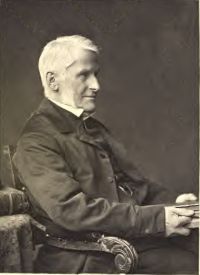
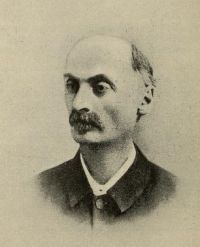
Portrait of A. H. Sayce A. H. Sayce,  The Egypt of the Hebrews and Herodotos

“ Canaan was the country in which the two streams of Babylonian and Egyptian culture met together, and we now know that Canaan was the centre of that literary activity which the Tel el-Amarna tablets have revealed to us. Canaan, in the age of the eighteenth dynasty, was emphatically the land of scribes and letter-writers. If libraries existed anywhere in Western Asia, they would surely have done so in the cities of Canaan. ”
Source: Gutenberg

Get perspective with Kwize: daily news enlightened by great literature