Pylon

Definition and stakes

1911 Encyclopædia Britannica (1911)

“ The small innermost pylon (No. VI.) is likewise the work of Tethmosis III. Amenophis III., though so great a builder at Thebes, seems to have contented himself with erecting a great pylon (No. III.) at the west end. The closely crowded succession of broad pylons here suggests a want of space for westward expansion, and this is perhaps explained by a trace of a quay found by Legrain in 1905 near the southern line of pylons; a branch of the Nile or a large canal may have limited the growth. As has been stated, Tethmosis III. continued on the southern axis ”

Source: Wikisource

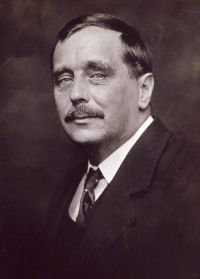
Portrait of Samuel R. Delany Samuel R. Delany,  Captives of the Flame

“ The familiarity was a refuge, and violently his mind clawed at it, tried to find other familiar things. But the towers, the looped roadways, that was all there was—and one small line of metal ribbon that soared out across the desert, supported by strut-work pylons. The transit ribbon! He followed it with his eyes, praying it would lead to something more familiar. The thirteenth pylon—he had counted them as he ran his eye along the silver length—was crumpled, as though a fist had smashed it. The transit ribbon snarled in mid-air and ceased. ”
Source: Gutenberg

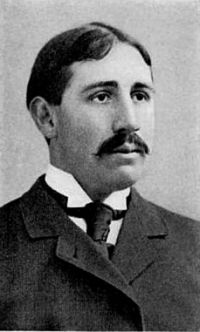
Portrait of William Jennings Bryan William Jennings Bryan,  The Old World and Its Ways

“ This temple, which was officially styled the Throne of the World, covers an immense area. One pylon, or gateway, is more than three hundred feet wide, nearly a hundred and fifty feet high, and has walls sixteen feet thick. One court covers almost a thousand square yards, and one aisle leads between pillars sixty-nine feet in height, about twelve feet in diameter and supporting capitals of eleven feet. ”
Source: Gutenberg

Get perspective with Kwize: daily news enlightened by great literature