Chevron

Definition and stakes

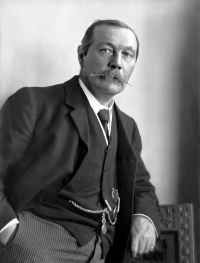
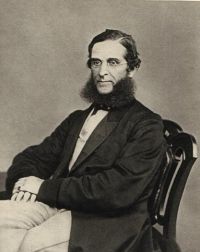
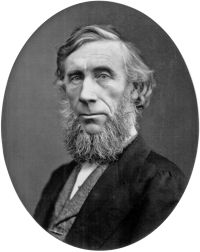
Portrait of John Edwin Cussans John Edwin Cussans,  The Grammar of Heraldry (1866)

“ The Chevron is composed of two bars, one fifth the width of the shield, issuing respectively from the dexter and sinister bases, and meeting at the fess point.
The chevronel contains a half, and the couple close a quarter of the chevron. The latter is borne, as its name implies, in couples, and usually cotising the chevron.
8. The Saltire is formed by the intersection of a bend and a bend-sinister. It has no diminutive. [1]
9.
”
Source: Wikisource

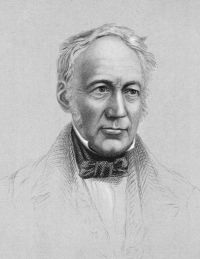
Portrait of H. B. Guppy H. B. Guppy,  The Solomon Islands and Their Natives

“ These chevron lines are often curiously transformed. The Z pattern of inlaid mother-of-pearl, which is shown in the illustration of the canoe-god, is apparently but a broken chevron line. On the heads of the Treasury spears fantastic patterns are cut out in which the chevron design is adapted to the human skeleton (See illustration) . . . . . . I may here add that the bamboo boxes used for the betel lime are ornamented with rectilinear patterns (scratched on their surfaces) which resemble those used in ornamenting the similar lime boxes of New Guinea, Borneo, and Sumatra. ”
Source: Gutenberg

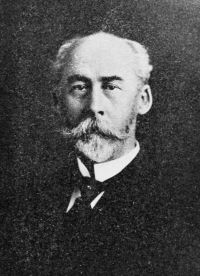
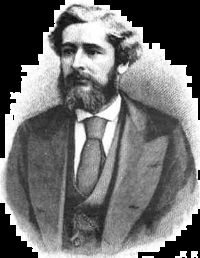
Portrait of Arthur Charles Fox-Davies Arthur Charles Fox-Davies,  A Complete Guide to Heraldry

“ A chevron in point embowed will be found in the arms of Trapaud quartered by Adlercron (Fig. 139) .
A field per chevron (Fig. 52) is often met with, and the division line in this case (like the enclosing lines of a real chevron) is subject to the usual partition lines, but how one is to determine the differentiation between per chevron engrailed and per chevron invecked I am uncertain, but think the points should be upwards for engrailed.
The field when entirely composed of an even number of chevrons is termed "chevronny" (Fig. 59) .
The diminutive of the chevron is the chevronel (Fig. 140) .
”
Source: Gutenberg

Get perspective with Kwize: daily news enlightened by great literature