Summary

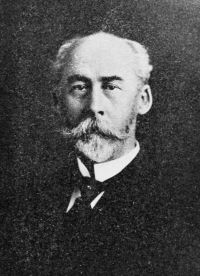
Portrait of William Henry Holmes William Henry Holmes Art in Shell of the Ancient Americans

Rude rafts which served to cross primeval rivers have become huge ships, and the original house of bark and leaves is represented by palaces and temples, glittering with light and glowing with color.
The steps which led up to these results are by no means clear to us; they have not been built in any one place or by any one people. Nations have risen and fallen, and have given place to others that in turn have left a heap of ruins. We find it impossible to trace back through the historic ages into and beyond the prehistoric shadows, the pathway to culture followed by any one people.
Source: Gutenberg

Portrait of William Henry Holmes William Henry Holmes Art in Shell of the Ancient Americans

Our prehistoric peoples seem to have taken special delight in carving its form in wood and stone, in modeling it in clay, in fashioning it in copper and gold, and in engraving it upon shell. One of the most interesting of all the specimens preserved to us is illustrated in Plate LVIII. The design with which this relic is embellished possesses no little artistic excellence, and doubtless embodies some one of the many charming myths of the heavens.
Source: Gutenberg

Portrait of William Henry Holmes William Henry Holmes Art in Shell of the Ancient Americans

The storm-bird of the Dakotas dwells in the upper air, beyond the range of human vision, carrying upon its back a lake of fresh water; when it winks its eyes there is lightning; when it flaps its wings we hear the thunder; and when it shakes out its plumage the rain descends. Myths like this abound in the lore of many peoples, and the story of the mysterious bird is interwoven with the traditions which tell of their origin.
Source: Gutenberg

Get perspective with Kwize: daily news enlightened by great literature