Nitrogen

Definition and stakes

William S. Walsh,  In Search of a Son

“ There are certain compounds containing nitrogen which are indispensable to our food. An animal nourished entirely on food which is destitute of nitrogen would become weak and would soon die."
"Excuse me, Monsieur Roger," said Albert Dalize: "how can nitrogen enter into our food?"
"That is a very good question," added Miette, laughing; "surely you cannot eat nitrogen and you cannot eat gas."
"The question is indeed a very sensible one," answered Monsieur Roger; "but this is how nitrogen enters into our food. We are carnivorous, are we not? we eat meat and flesh of animals.
”
Source: Gutenberg

Jean Macé,  The History of a Mouthful of Bread

“ I should be a good deal puzzled to say what nitrogen does in the air: he is there as an inert body, and leaves all the business to the oxygen. When we breathe, for instance, the nitrogen enters our lungs together with its inseparable companion, but it goes out as it went in, without leaving a trace of its passage. Nevertheless, as sometimes happens among men, the one who does nothing takes up the most room. Nitrogen alone occupies four-fifths of the atmosphere, where it is of no other use than to moderate the ardent activity of king oxygen, who would consume everything were he alone. ”
Source: Gutenberg

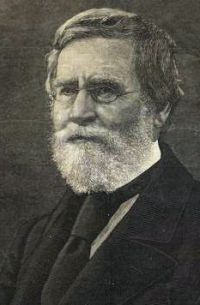
Portrait of Albert Benjamin Prescott Albert Benjamin Prescott,  Popular Science Monthly (1877)

“ It is the character of nitrogen to refuse chemical combinations. Uncombined nitrogen is nowhere available for vital uses, to any appreciable extent. Filling perfectly its humble service in Nature as a diluent in the air, its qualification is to be inert and to remain changeless. Among the resources of life and in the marts of subsistence where its compounds rank high in value, nitrogen as a simple has no place at all. ”
Source: Wikisource

Get perspective with Kwize: daily news enlightened by great literature