John H. White

Biographical details

John H. White,  The 'Pioneer': Light Passenger Locomotive of 1851

“ To find an American locomotive not equipped with equalizers is surprising since they were almost a necessity to produce a reasonably smooth ride on the rough tracks of American railroads. Equalizers steadied the motion of the engine by distributing the shock received by any one wheel or axle to all the other wheels and axles so connected, thus minimizing the effects of an uneven roadbed. The author believes that the Pioneer is a hard-riding engine. ”
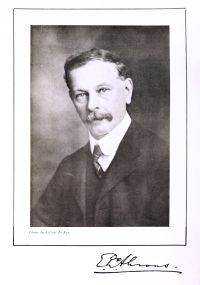
Source: Gutenberg

John H. White,  Introduction of the Locomotive Safety Truck

“ But as the decade advanced, the need grew for heavy freight engines that could be safely run at speed. Without a pilot truck, the leading driving axle of the freight engine was generally overloaded. While the application of a 4-wheel truck reduced this front-end overload and permitted faster running it materially reduced the traction of the drivers by bearing too great a portion of the total weight. ”
Source: Gutenberg

John H. White,  The 'Pioneer': Light Passenger Locomotive of 1851

“ Of all the mechanisms on a 19th-century locomotive, the feed pump was the most troublesome. If an engineer could think of nothing else to complain about, he could usually call attention to a defective pump and not be found a liar. Because of this, injectors were adopted after their introduction in 1860. It is surprising that the Pioneer, which was in regular service as late as 1880 and has been under steam many times since for numerous exhibitions, was never fitted with one of these devices. ”
Source: Gutenberg

Get perspective with Kwize: daily news enlightened by great literature