Summary

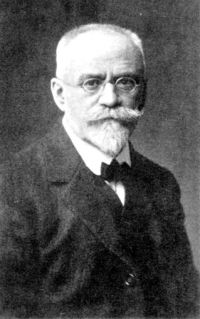
Portrait of Joseph Deniker Joseph Deniker The Races of Man: An Outline of Anthropology and Ethnography

Among the peoples who know nothing of dress there are some quite savage, like the Fuegians, the Australians, the Botocudos, and others who have attained a certain degree of civilisation, like the Polynesians (before the arrival of Europeans) and the Niam-Niams. Let us remember, moreover, that the Greeks of classic antiquity only half covered their nakedness. It does not necessarily follow that the less clothes a people wears the more savage it is. It is a question of climate and social convention, entirely like the emotion of modesty, which is not at all something natural and innate in man.
Source: Gutenberg

Portrait of Joseph Deniker Joseph Deniker The Races of Man: An Outline of Anthropology and Ethnography

Nowhere on the earth has there been found a race of men the members of which lived completely alone and isolated as the majority of animals are seen to do. It is in fact but very rarely that the latter combine into societies; they form a family group only temporarily during the period of raising the young, etc. Man, on the contrary, becomes almost helpless apart from society, incapable of maintaining the struggle for existence without the help of his fellow-men. The development of all the manifestations of “sociality” is then the measure of progress of human societies.
Source: Gutenberg

Portrait of Joseph Deniker Joseph Deniker The Races of Man: An Outline of Anthropology and Ethnography

On examining attentively the different “ethnic groups” commonly called “peoples,” “nations,” “tribes,” etc., we ascertain that they are distinguished from each other especially by their language, their mode of life, and their manners; and we ascertain besides that the same traits of physical type are met with in two, three, or several groups, sometimes considerably removed the one from the other in point of habitat.
Source: Gutenberg

Get perspective with Kwize: daily news enlightened by great literature