Summary

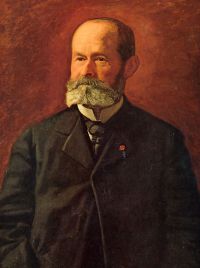
Portrait of Daniel G. Brinton Daniel G. Brinton Races and Peoples: Lectures on the Science of Ethnography

The philosopher Hobbes taught that the natural condition of man in society is one of perpetual warfare with his neighbors. This grim theory is sadly attested by a study of savage life. The wretched Fuegians, the miserable Australians, with really nothing worth living for, let alone dying for, fall to cutting each other’s throats the moment that tribe encounters tribe. So it has been in all ages, so it has been in all stages of culture. The warrior, the hero, is the one who wins the hearts of women by his fame, and the devotion of men by his prowess. Civilization helps not at all.
Source: Gutenberg

Portrait of Daniel G. Brinton Daniel G. Brinton Races and Peoples: Lectures on the Science of Ethnography

With increased means of locomotion and augmented love of progress, civilization is now transported, with all its complex forces, to every nation and every tribe, no matter where or of what race, and the question is put point blank, Will you accept this precious gift, or will you have it forced upon you, with such results as may happen? Japan has welcomed the message, inscrutable China hesitates, Persia wavers, the miserable Australians refuse, the savages turn their back—all in vain
Source: Gutenberg

Portrait of Daniel G. Brinton Daniel G. Brinton Races and Peoples: Lectures on the Science of Ethnography

In no century of the world’s history have such destructive battles been fought as in the nineteenth; at no former period have the powers of the earth collected such gigantic armies and navies as to-day.
This love of combat at once separates and unites nations. To destroy the common foe, the bonds of national or tribal unity are drawn the tighter; and the aversion to the enemy tends to the preservation of the ethnic type.
Source: Gutenberg

Get perspective with Kwize: daily news enlightened by great literature