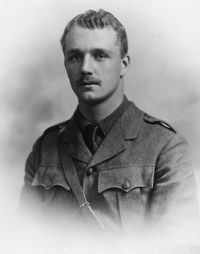
R. V. C. Bodley

R. V. C. Bodley

Summary

Portrait of R. V. C. Bodley R. V. C. Bodley Algeria from within (1927)

A small group of palm-trees cuts the horizon, and then, away, away, the Sahara as far as the eye can reach. The sun sets in an orange radiance, wrapping the palm-trees in a mantle of gold-dust; the breeze springs up and rustles through the oasis; peace and silence are everywhere, and one is tempted to remain in this quiet for a few days. It is free to the traveler to do as he pleases, but our journey must be accomplished, and sooner or later we must push on toward the east.
After Guerrera the road continues across this rose-colored landscape.
Source: Gutenberg

Portrait of R. V. C. Bodley R. V. C. Bodley Algeria from within (1927)

The hills and trees to the north seem to be the land, and the great expanse of stone and scrub spread out before one is the sea. To the west barren mountains rise up with almost flat tops, reminding one of billiard tables built by some dead race of giants. The world has suddenly changed as the car rushes on along the straight, even road.
No one is in sight, no habitation—just the wide plain. If the Sahara proper is to attract one the attraction will come now. There is no question about this: the expanse of desert either takes hold of one’s mind or else it merely bores.
Source: Gutenberg

Portrait of R. V. C. Bodley R. V. C. Bodley Algeria from within (1927)

His first impressions of Algiers, rising out of the Mediterranean like a white bubble in a sea of sapphire, will be the best he will have of this once Turkish city, now a vast commercial town and only a little less noisy than Marseilles. The sight of the Arab quarter, piling itself up in a pyramid of white and blue roofs above the European houses, with the fresh gardens of Mustapha away to the left and the Turkish forts in the foreground, is a vision of delight.
Source: Gutenberg

Get perspective with Kwize: daily news enlightened by great literature