“ He approached the snoring Pathan and roused him, not ungently, with the toe of his boot. The native sprang up, fumbled at his disarranged turban, salaamed deeply, and finally stood upright, a splendid figure of a man, six feet of him, if his peaked turban were taken into account—hard, wiry, with aquiline features, grey beard, and eyes keen as a sword-thrust; a man without knowledge of fear, cunning and implacable in hatred, but staunchly devoted to the Englishman he served, who, in his eyes, was the first of living men. ”
Turban
Definition and stakes
The turban, a head covering made from wrapped fabric, carries cultural, religious, and symbolic importance across various societies. From Sikh dastars to the headwear of Sufi scholars, it represents identity, status, and tradition. Authors such as Maud Diver portray it as a symbol of rugged masculinity, while Wilhelm Hauff employs it to highlight differences between outward appearance and inner reality.
Blanche McManus emphasizes its function in defining caste through color and style. These differing depictions illustrate the turban as both a functional garment and a medium for cultural storytelling, underscoring its lasting presence in literature and everyday life.
Quotes about “turban”
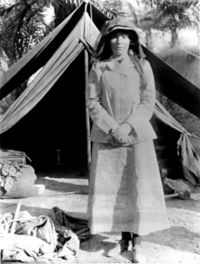 Gertrude Lowthian Bell,
Safar Nameh, Persian Pictures: A Book Of Travel
Gertrude Lowthian Bell,
Safar Nameh, Persian Pictures: A Book Of Travel
“ The plane-trees grew straight and tall on each side of the road; overhead their branches touched one another, arching together and roofing it with leaves fresh and green, as only plane-leaves can be all through the hot summer. Between the broad leaves [127] fell tiny circles of sunshine, which flickered on his white turban and on the linen vest about his throat as he came. He looked like a very part of his surroundings, for his woollen cloak was of a faded gray, the colour of Persian dust, and his under-robe was as green as the plane-leaves, and his turban gleamed like the sunshine ”
“ We waited outside his house for him, and as soon as his big head, surmounted by an enormous turban, appeared, we threw our caps in the air and shouted for joy. The head and turban always came out first, and the tiny little body which followed was clad in a shabby little cloak, wide trousers and a broad girdle; attached to the latter was a long dagger, so much out of proportion to the size of his body that it was difficult to tell at a first glance whether Mouk was fastened to the dagger or the dagger to him. ”


Related terms
Authors who wrote about “turban”
Anne C. GoaterAnonymousB. M. CrokerG. E. Mitton Lafcadio Hearn
 Edgar Thurston
 Wilhelm HauffGeorge HortonRichard MutherW.H.R.RiversBlanche McManusFanny Parkes ParlbyW. H. Davenport AdamsGertrude Lowthian Bell
 Maud Diver
 William Henry WilkinsJames Sutherland Cotton, William Wilson Hunter…
 Meadows Taylor
 Mark Twain
 Benjamin Lumley
Lafcadio HearnEdgar ThurstonWilhelm HauffGeorge HortonRichard MutherW.H.R.RiversBlanche McManusFanny Parkes ParlbyW. H. Davenport AdamsGertrude Lowthian BellMaud DiverWilliam Henry WilkinsJames Sutherland Cotton, William Wilson Hunter…Meadows TaylorMark TwainBenjamin Lumley