“ When in full dress he wears a helmet several sizes too large for him, but, in general, prudently discards this article of headgear as having a tendency to render him conspicuous in a country where helmets are obsolete, and wraps his head in a handkerchief that he ties over his ears. ”
Headgear
Definition and stakes
Headgear, including hats, helmets, and turbans, serves a range of purposes, from protection to symbolism. Authors such as D.R. McAnally observed its practical use, while the Encyclopædia Britannica (1911) documented historical changes in women’s headwear, from mob caps to structured hoods.
Roger Acton emphasized simple designs, and Charles Ffoulkes examined the functional development of medieval helmets. From religious coverings to symbols of status such as crowns, headgear reflects cultural, social, and personal identities, as shown through these varied literary viewpoints.
Quotes about “headgear”
Henry Jones, Oswald Barron, Stanley Cook, Thomas Joyce and W. Alison Phillips, 1911 Encyclopædia Britannica (1911)
“ Among ladies the butterfly head-dress and the steeple cap passed out of fashion, and a grave headgear comes in which has been compared with a dog-kennel, a hood-cap thrown over head and shoulders, the front being edged with a broad band which was often enriched with needlework, the ends falling in lappets to the breast. ”
Henry Jones, Oswald Barron, Stanley Cook, Thomas Joyce and W. Alison Phillips, 1911 Encyclopædia Britannica (1911)
“ Before 1790 women had begun to dismantle their high headgear, returning to nature by way of a frizzled bush, like a bishop’s wig, with a few curls hanging over the shoulders. Over such heads would be seen towering mob-caps tied with ribbon and edged deeply with lace. Skirts took a moderate size and even court hoops were but panniers hung on either side of the hips. Short jackets with close half-sleeves were worn with the neck and breast covered with a cambric buffant that borrowed a mode from the pouter pigeon. ”
Roger Acton, Encyclopædia Britannica, Ninth Edition (1878)
“ Xo headgear is worn, except sometimes a net to confine the hair, a bunch of feathers, or the tails of small animals. The bosom or back is usually tattoed, or rather scored with rows of hideous raised scars, produced by deep gashes at the age when youth comes to manhood or womanhood. ”
Various, The Cornhill Magazine, (vol. xli… (1860)
“ Hitherto it had been the object of the military authorities of all nations to make their fighting men as conspicuous as possible, exaggerating their stature by fantastic headgear and setting them in strong relief to every variety of natural background by means of bright colours and pipeclay. ”
Various, Punch, or the London Charivari…
“ HEADGEAR FOR HEROES. [A contemporary, having heard of the hat specially designed for M. Clemenceau, has decided that the bowler, the topper, the Homburg, the straw, the cloth cap and all other styles at present more or less in vogue leave much to be desired, and has therefore inaugurated a search for the ideal male headdress.] The Smillie.—A Phrygian model, executed in red Russia leather. Special features are the asbestos lining, the steam vents and the water-jacket, which combine to minimise the natural heat of the head. ”
Charles John Ffoulkes, Armour & Weapons
“ As we have shown, these great helms were not attached to the body armour and were thus liable to be struck off in battle. In order to recover them a chain was sometimes stapled to the helm and fastened to the waist or some portion of the body armour (Fig. 6) . [Pg 28] The usual form of helmet in the twelfth century is the cup-shaped headpiece of which the Cervellière is a typical example (Fig. 7) . It was either worn as the sole defence or was used in conjunction with the helm as an under-cap. The wide-rimmed hat of iron is found all through the period of defensive armour with which we deal. ”
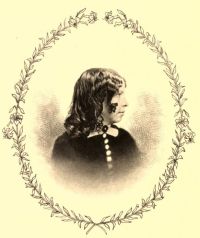
“ For Nature will be sure to whisk the hair away from your ears where you want it, and into your eyes where you don't want it, besides crowning you with magnificent disorder in the morning. But as I have always believed that no evil exists without its remedy, I had long been exercising my inventive genius in attempts to produce a head-gear which should at once protect the ears, confine the hair, and let the skull alone. ”
1911 Encyclopædia Britannica (1911)
“ This is the typical helmet of the 11th-century warrior, and is made familiar by the Bayeux Tapestry. From this point however (c. 1100) the evolution of war head-gear follows two different paths for many years. On the one hand the simple casque easily transformed itself into the basinet, originally a pointed iron skull-cap without nasal, ear-guards, &c. On the other hand the knight in armour, especially after the fashion of the tournament set in, found the mere cap with nasal insufficient, and the heaume (or “helmet”) gradually came into vogue. ”
Philip Henry Sheridan, Personal Memoirs of P. H. Sheridan…
“ Many of the young men and women were handsome in feature below the forehead, having fine eyes, aquiline noses and good mouths, but, in conformity with a long-standing custom, all had flat heads, which gave them a distorted and hideous appearance, particularly some of the women, who went to the extreme of fashion and flattened the head to the rear in a sharp horizontal ridge by confining it between two boards, one running back from the forehead at an angle of about forty degrees, and the other up perpendicularly from the back of the neck. ”
Frederick Martin, The Life of John Clare
“ To prevent his tumbling over them, like a clown in the pantomime, he held up his pantaloons with one hand, while with the other he kept his helmet from falling in the mud. This wonderful headpiece was as much too small for the big-brained recruit as the other parts of the uniform were too large, and it required the most careful balancing to keep it in a steady position on the top of the crown in a quiet atmosphere while, in any little gust of wind, it was indispensable to ensure the equilibrium with outstretched arm. ”
Jules Jacoulet, Notes on equitation and horse training (1910)
“ The horse that lowers his head against his chest.—It is hard work to correct this fault and much more difficult to raise the head than to lower it. To raise the head, begin by extending the neck in order to open the angle it makes with the head. When the neck is well extended use the snaffle reins to gradually raise the head, watching carefully that the horse keeps his muzzle to the front. The upward pull of the snaffle reins must be felt at the corners of the lips; the legs must act vigorously to prevent any slowing of the gait. ”
Edward Lewes Cutts, Scenes and Characters of the Middle Ages
“ It will be seen that the sleeves of the hauberk are not continued, as in most examples, over the hands, or even down to the wrist; but the forearm is defended by studded armour, and the hands by gauntlets which are probably of plate. The leg defences are admirably exhibited; the hose of [Pg 350] banded mail, the knee cap, and shin pieces of plate, and the boots of overlapping plates. The helmet also, with its royal crown and curious double crest, is worth notice. In the original drawing the whole suit of armour is brilliantly executed. ”
 Théophile Gautier,
The Romance of a Mummy and Egypt
Théophile Gautier,
The Romance of a Mummy and Egypt
“ Women wearing a small helmet from which depended three long cords ending in a tassel, their wrists and ankles bound with black leather bands, and wearing close fitting drawers suspended by a single brace passed over their shoulders, performed tricks of strength and contortions each more surprising than another; posturing, throwing themselves back, bending their supple bodies like willow branches, and touching the ground with their necks without displacing their heels, supporting in that impossible attitude the weight of their companions ”
Various, Blackwood's Edinburgh Magazine…
“ Either, then, the shape of the covering should conform to that of the head, or it should not, and we take our ground in support of the latter position. The natural form of the head is determined by the rotundity of the cranium, beautifully modified by the waving curls of the hair—we speak of the abstract well-formed head; and nothing that approaches to the same shape will ever do more than give a bad substitute for the outline of the head as nature framed it. ”
Various, Heathen mythology, Illustrated by extracts from the most celebrated writers…
“ It has a close helmet from which the hair, delicately parted on the forehead, half escapes. The attitude gives entire effect to the perfect form of the neck, and to that full and beautiful moulding of the lower part of the face and mouth, which is in living beings the seat of the expression of a simplicity and integrity of nature. ”
1911 Encyclopædia Britannica (1911)
“ The morion and cabasset have no face, cheek or neck protection. The typical head-piece of the 17th-century soldier in England and elsewhere is a burgonet skull-cap with a straight brim, neck-guard and often, in addition, a fixed vizor of three thin iron bars which are screwed into, and hang down from, the brim in front of the eyes. ”
Sarah Josepha Buell Hale, Mrs. Hale's Receipts for the Million
“ High Shoulders.—A medical correspondent of an English paper attributes the high shoulder and the lateral curvature of the spine, which so frequently disfigures young girls, to the shoulder straps of their dresses resting below the shoulder and on the muscles of the arm, instead of being on the shoulder, which compels the wearer to be constantly hitching her shoulders to keep up her dress, an action that results in forcing up the shoulder, a distortion of the chest, and a lateral curvature of the spine. ”
Various, The Strand Magazine: Vol. 07, Issue 37…
“ I opened the parcel, and from the enveloping paper emerged a steel helmet—but not an ordinary helmet, oh, no!—a superb, a monumental morion, with gorget and pointed visor of strange form. The visor was raised, and I tried to discover what prevented it from being lowered."It will not go down—the hinges have got out of order," said my uncle; "but it's a superb piece, and, when it has been thoroughly cleaned and touched up, will look well—that shall be your to-morrow's job." ”
Annette Fiske, Structure and Functions of the Body
“ The occipital and frontal muscles, united by a thin aponeurosis, cover the whole upper cranium and are known as the occipito-frontalis muscle. At the back this is attached to the occipital bone, while in front it interlaces with various face muscles. It is a powerful muscle and raises the brows, wrinkles the forehead, and draws the scalp forward. Long hair grows on the skin over it as a further protection against blows upon the skull and sudden variations in temperature. ”
Various, Littell's Living Age (1876)
“ This head-gear is black, made of some light fibrous substance, as finely woven as a horsehair sieve, and in shape much resembling that of the peasant women of south Wales, the heroines of Fishguard. The cavity to receive the head is cup-shaped, and beneath the brim. ”
Charles Bice, Journal of Residence in the New Hebrides…
“ Being head and shoulders taller than most of our natives, I suffered untold agonies mentally and physically, but I submit to the necessity, knowing that unless I commence to{48} improve matters myself, I may expect the same discomforts to the end of the chapter. My helmet on more than one occasion has saved my head very severe concussions, and to be bonnetted is no uncommon occurence. ”
Various, Blackwood's Edinburgh Magazine…
“ Having, therefore, criticized our present head-gear, and condemned our hats, without pulling them to pieces, let us enquire what a proper covering for the head should be: first of all in point of usefulness, and next in point of comely appearance. But let no man vainly imagine that we expect to suit the fancies of all the creatures privileged to wear hats, or even to cover their heads; we do not pretend to invent, or decide upon, any one given type or form of head-dress. ”
John Starkie Gardner, Armour in England, from the Earliest Times to the Reign of James the First
“ The great helm, always with a fan-crest, the chapelle-de-fer worn beneath or above the mail coiffe, the bassinet, often visored, and the broad-brimmed round helmet are worn, except in jousts, quite indifferently.Fig. 10.—Melée.From the early fourteenth-century English MS. known as Queen Mary’s Psalter, 2 B. vii., in the British Museum. The combatants are in banded mail and long surcoats, and some wear the great helms with fan-crests. Ailettes and knee-caps are the only plate-armour visible. Some of the horses have long housings and also bear the fan-crest. ”
Theodore Hoe Mead, Horsemanship for Women (1887)
“ Taking first the head, which should be bony, not fleshy, remember that the more brain the more "horse sense." Next look at the neck, which should be neither too thick nor too long, but connecting head and shoulders by a graceful sweep. Then the fore-quarters, observing that the shoulder-blade and true arm are both long, well supplied though not loaded with muscle, and join each other at the point of the shoulder at a rather sharp angle. ”
 Carl Bovallius,
Nicaraguan Antiquities
Carl Bovallius,
Nicaraguan Antiquities
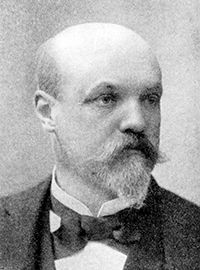
“ The head-cover may be considered to exhibit the form of a helmet; this reached to the shoulders at both sides, hiding the ears completely; but nearly at the place of the ears there was on each side a shallow circular depression with a small excavation, probably representing a hole, in the centre. From the lower part of the helmet a thick elevation, grooved length-wise in front, came down over the chest. ”
James Law, Text book of veterinary medicine… (1902)
“ A halter, or a rope around the horns, may be tied to a beam overhead, or the head may be laid on thick bundles of straw which will keep it up to or above the level of the chest, and in this way not only is gravitation ensured, but the brain is protected against the violent blows and concussions, which come from dashing the head on the ground. ”
 Arnold Henry Savage Landor,
Corea or Cho-sen: The Land of the Morning Calm
Arnold Henry Savage Landor,
Corea or Cho-sen: The Land of the Morning Calm
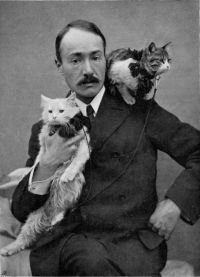
“ These head-bands are worn so very tightly from their earliest youth, that I have often noticed men—when the head-band was removed—show a certain flattening of the upper part of the forehead, due undoubtedly to the continuous pressure of this head-gear. In such cases, however, the cranial deformation—though always noticeable—is but slight, and, of course, unintentionally caused. The skull, as a whole, in the case of those who have worn the head-band is a little more elongated than it is in the case of those few who have not ”
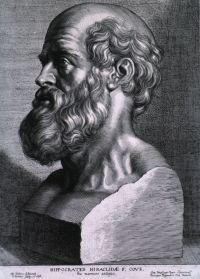
“ When a person is pained in the back part of the head, he is benefited by having the straight vein in the forehead opened.69. Rigors commence in women, especially at the loins, and spread by the back to the head; and in men also, rather in the posterior than the anterior side of the body, as from the arms and thighs; the skin there is rare, as is obvious from the growth of hair on them. ”
Montagu Browne, Practical Taxidermy
“ Constantly turn the head to the light, to see how you are going on. If a horned head and heavy, many plans will occur to you for easily supporting it, such as ropes attached to the horns, and to a beam, etc.. When all the head and back of the neck is adjusted to your measurements, bring the skin over and around the edge of the oval to its back, attaching it firmly there with strong tacks.Nothing has as yet been done to the eyes, lips, or nose. Turn, therefore, the bags of the skin of the eyelids inside out, and, filling them with putty or clay, shape them and return. ”
John Simon, Muscles and Regions of the Neck (1843)
“ But when the head is thrown far back, a predominance is given to the posterior fibres of the muscle, which being attached behind the line of the occipito-vertebral articulation, become then capable of increasing this direction of the head. The sterno-mastoid of one side, acting singly, rotates the head and flexes it with a lateral inclination to its own side, so as to bring the side of the head nearer to the shoulder, and to turn the face in the opposite direction. ”
Blair Jaekel, Windmills and Wooden Shoes
“ This headdress consists of a kind of metal skullcap, as often made of gold as of silver, fitting closely at the temples and embellished at these points with a pair of spiral ornaments. Over this is worn a cap of white or light blue lace, having a so-called “tail piece” dangling down the back of the neck like the scoop of a fireman’s helmet. ”
Florence Mary Gardiner, The Evolution of Fashion
“ During the Middle Ages feminine head-gear underwent many changes. Golden nets, and linen bands closely pinned round the hair and chin, were followed by steeple-shaped erections and horned head-dresses in a variety of shapes, of which the accompanying sketches will give a better idea than any written description. ”
Francis Warner, Popular Science Monthly (1882)
“ The movements of the head—aside from those due to movements of the cervical spine—may be classified as those of flexion and extension; the bending forward and backward of the head; of rotation, in which the head remains erect; and of inclination or the depression of one or the other side. Flexion and extension of the head are of frequent necessity and physiological import; rotation is frequently necessary to move the eyes toward an object looked at, or to direct the ear toward a source of sound. ”
